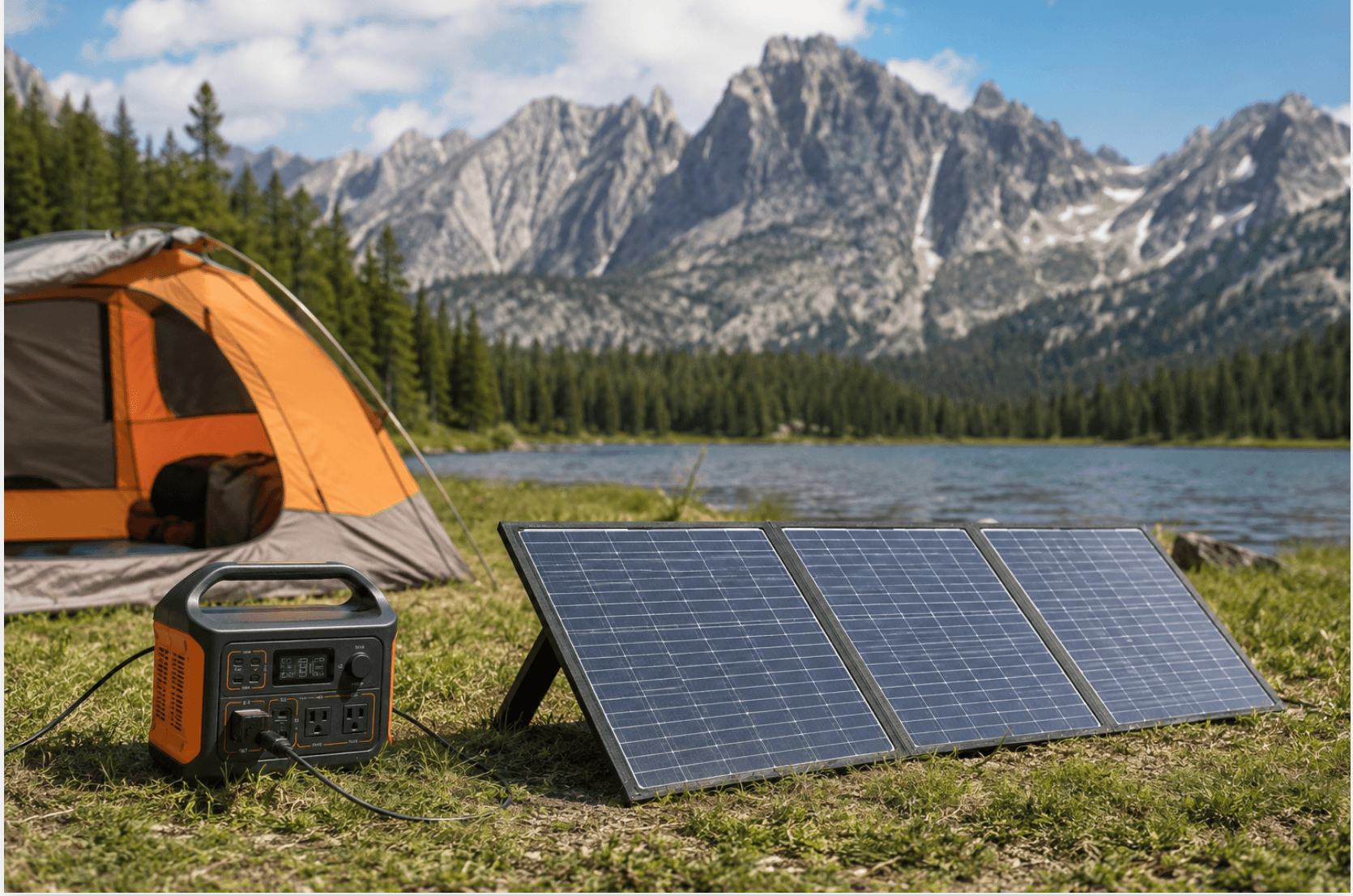
I’ve spent years sizing solar arrays and troubleshooting why panels underperform in the field. So when people ask me what camping solar panel they should buy, I don’t start with a brand name; I start with the physics.
Because the truth most “best of” lists won’t tell you is this: the rated wattage on the box is a marketing number, not a promise. A 100W panel rarely gives you 100W in the real world.
In this guide, I’ll show you what actually matters when choosing camping solar panels, how to size one for your trip, and a handful of models worth your money. No fluff, just the stuff I’d tell a friend.
What a camping solar panel actually does
A camping solar panel converts sunlight into DC electricity. It does not store that energy. You need one of two things on the other end: a portable power station (a battery with an inverter) or a device with a built-in battery you charge directly over USB.
Most campers fall into two camps.
Direct charging
Small foldable panels (10W–50W) with USB-A and USB-C ports that top up phones, headlamps, and GPS units. No power station needed.
Power-station charging
Bigger foldable panels (100W–400W) with MC4 or DC connectors that feed a battery you then draw from for lights, fans, electric coolers, and laptops.
Figure out which camp you’re in before you spend a dime. A backpacker counting grams and a car camper running a fridge need completely different gear.
The number that lies: rated vs. real-world output
Here’s the engineering reality. Manufacturers rate panels under Standard Test Conditions. 1000 W/m² of irradiance at a cell temperature of 25°C, with the panel aimed perfectly at the sun. You will basically never hit those conditions while camping.
In practice, most portable panels deliver roughly 30%–70% of their rated output across a real day, depending on sun angle, haze, cloud, and temperature.
So a 200W panel might realistically produce somewhere around 60W–140W through the day, peaking near rated power only for a short window around solar noon when it’s pointed correctly.
Two practical takeaways from this.
Buy more wattage than the math suggests
If you calculate you need 100W, get 150W–200W. The margin covers cloudy days and bad angles.
Angle matters enormously
A panel lying flat on the ground loses a huge chunk of its output. Tilt it toward the sun and re-aim it a couple of times a day. Some panels (like the Anker SOLIX line) build in a sun-alignment guide for exactly this reason.
How to size your panel: a simple method
Add up the watt-hours (Wh) you’ll use per day, then work backwards.
A quick example for a weekend car-camping setup.
- Phone charges: ~30 Wh
- LED lights (5W × 4 hrs): 20 Wh
- Small 12V fan (10W × 6 hrs): 60 Wh
- Electric cooler (45W average × 24 hrs): ~400 Wh
That’s roughly 500 Wh/day. Because real-world output is well below rated, a 100W panel might only harvest 300–400 Wh on a good day, so for that cooler-heavy setup, you’d want a 200W panel paired with a 500–1000 Wh power station.
Drop the cooler, and a single 100W panel plus a 500Wh station cover lights, phones, and a fan comfortably.
The specs that actually matter
After years of this, here’s where I tell people to focus and where to ignore the marketing.
Cell efficiency (21%–24% is the current sweet spot)
Higher efficiency means more watts from a smaller, lighter panel. Top monocrystalline and N-type panels in 2026 sit in the 22%–25% range. This matters most to backpackers, where every ounce counts.
Weatherproofing (the IP rating)
This is the spec people get burned on. Most foldable fabric panels are only IP65 rated for splashes and light rain, but they can suffer permanent damage in a heavy downpour.
If you camp in genuinely wet conditions, look for IP67 or IP68-rated panels, which survive submersion. Don’t assume “waterproof” on the label means storm-proof.
Coating and durability
Look for ETFE coatings rather than older PET plastic for better UV resistance and a longer lifespan.
Connectors
Standard MC4 connectors are universally adaptable; you can hook almost any panel to almost any power station with a cheap adapter. USB-A/USB-C ports built into the panel let you skip the power station entirely for small devices.
Weight and folded size
Be honest about your vehicle and your back. A 30 lb panel is nothing for car camping but absurd for a hike. Check the folded dimensions, not just the weight.
Camping solar panels worth buying
These are models that consistently show up well in 2026 testing and that I’d be comfortable recommending based on their specs. Wattage and price shift often, so check the current listing before buying.
Best all-around for weekend campers: Jackery SolarSaga 100W
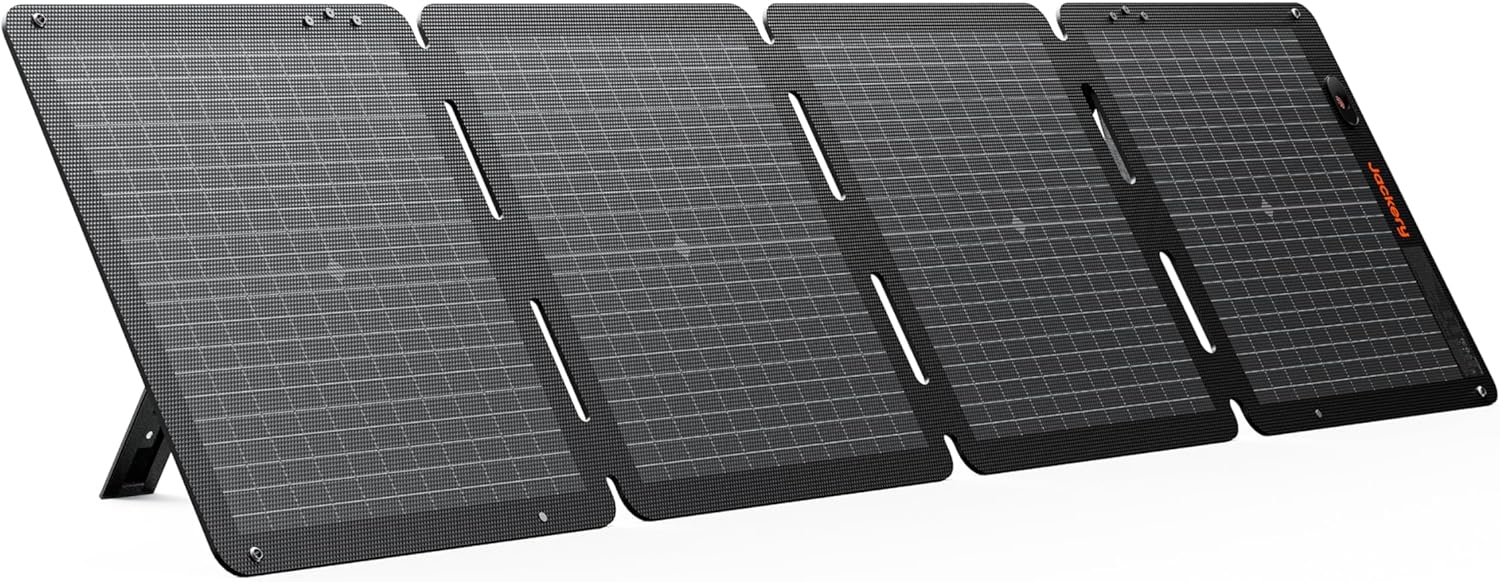
The reliable, plug-and-play choice. High enough output to feed a camping power station, light enough to pack in a vehicle, and it pairs directly with Jackery’s Explorer stations. Note it’s IP65, so keep it out of heavy rain.
???? Check the current price on Amazon
Best for wet and rugged conditions: EcoFlow 160W
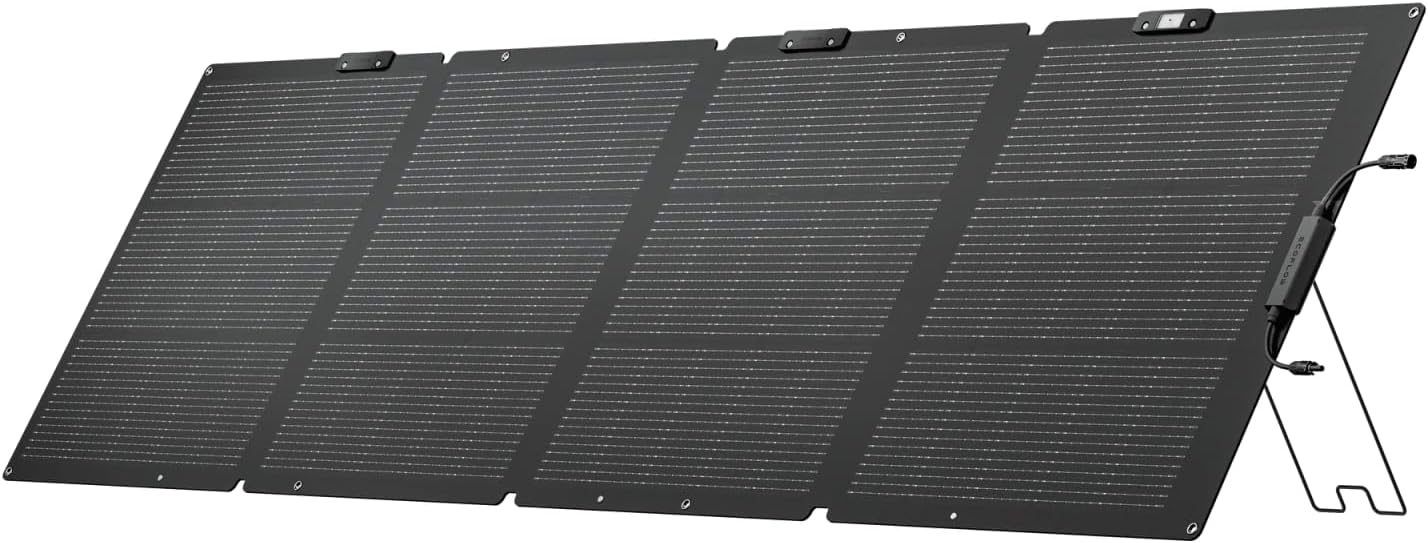
The one I’d grab if the forecast looks bad. It carries an IP68 waterproof rating, so it shrugs off heavy rain that would kill most fabric panels, with a conversion rate up to ~22%. The 160W output is a nice middle ground for charging mid-size batteries quickly.
???? Check the current price on Amazon
Best high-power option for big setups: Anker SOLIX PS400 (400W)
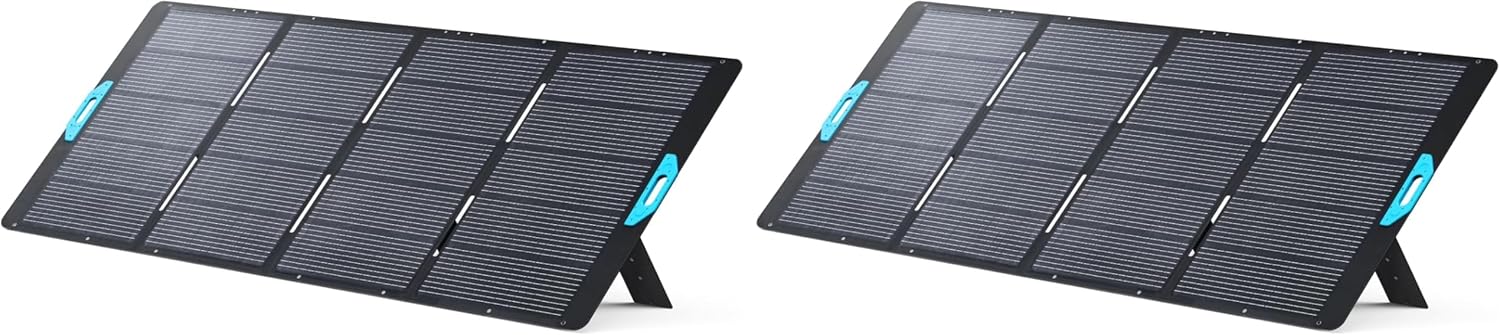
A beast for overlanders and base-camp setups running coolers and multiple devices. The built-in sun-alignment tool is a genuinely useful feature for squeezing out real-world watts. Heavier than a 200W panel, so this is car-camping gear, not backpacking gear.
???? Check the current price on Amazon
Best efficient mid-size panel: Renogy E.Flex 200W (N-Type)
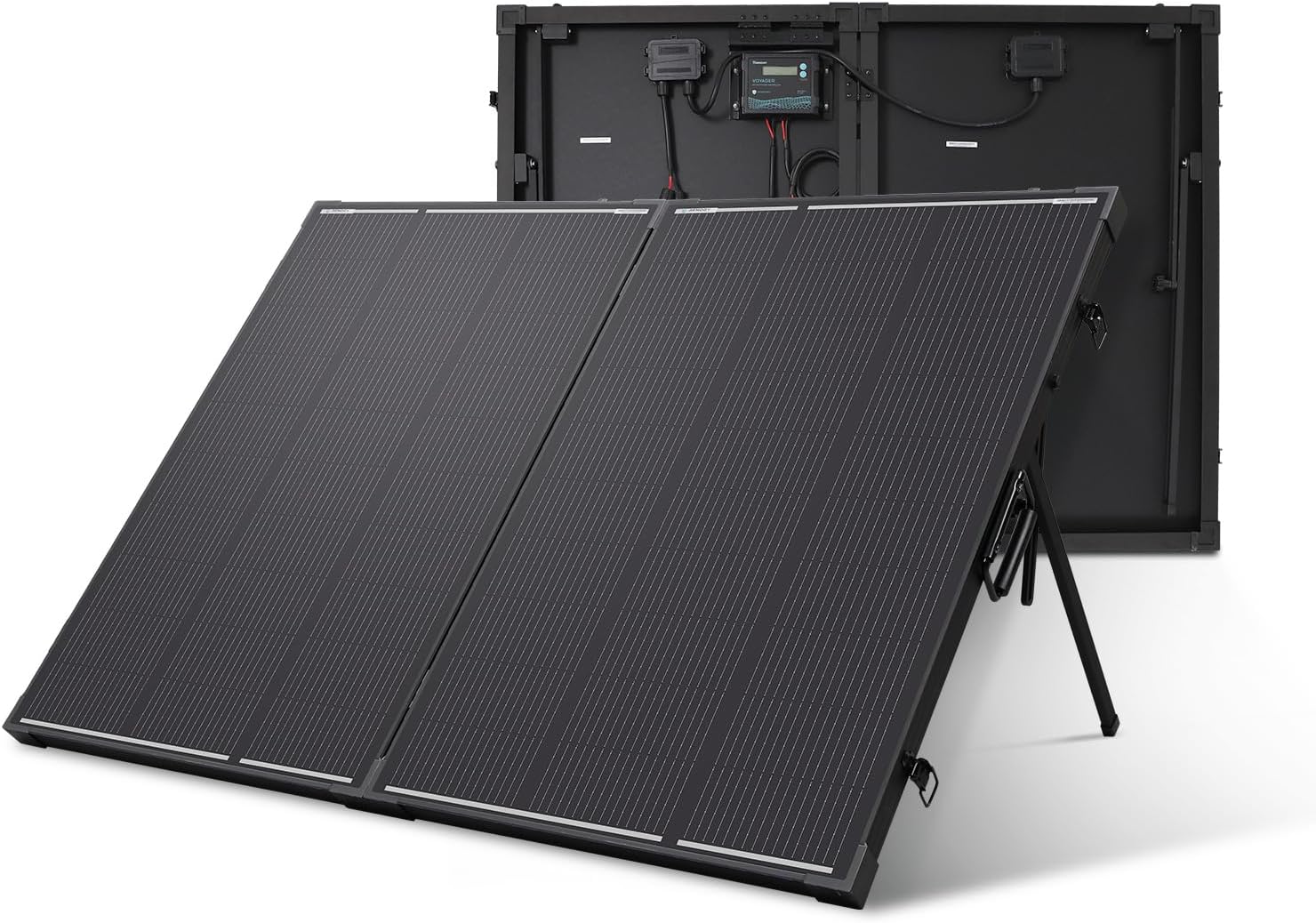
N-type cells with efficiency up to ~25%, which helps it hold output better in less-than-ideal light. A strong balance of efficiency, portability, and flexibility for a 200W foldable.
???? Check the current price on Amazon
Best budget pick: ALLPOWERS SP033 200W
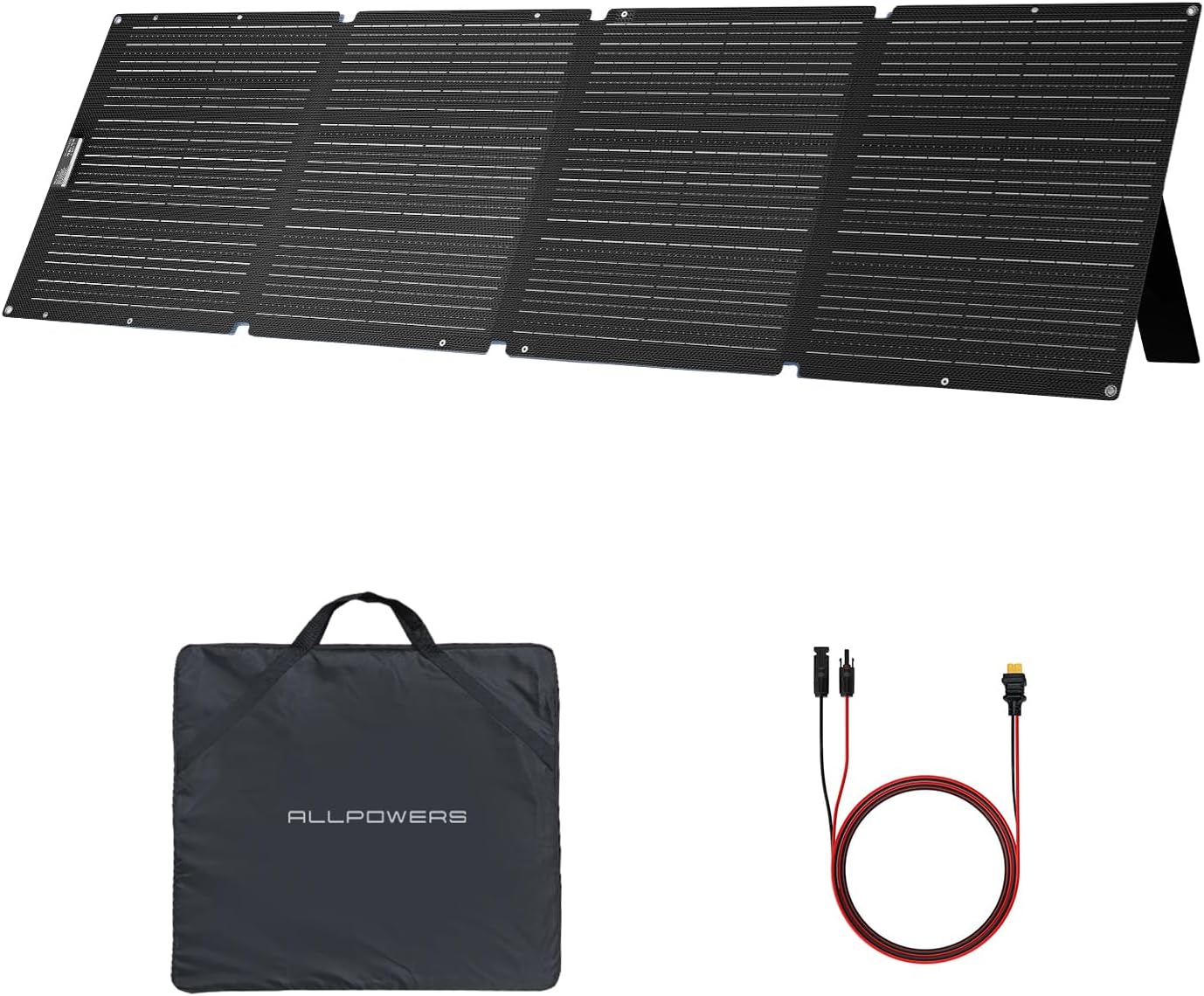
A 200W-rated output at a lower price, with 19%–22% efficiency. It leans more on strong sunlight to hit higher output, but for sunny-weather camping on a budget, it does the job.
???? Check the current price on Amazon
Best ultralight for backpackers: Lion Energy 50W Foldable
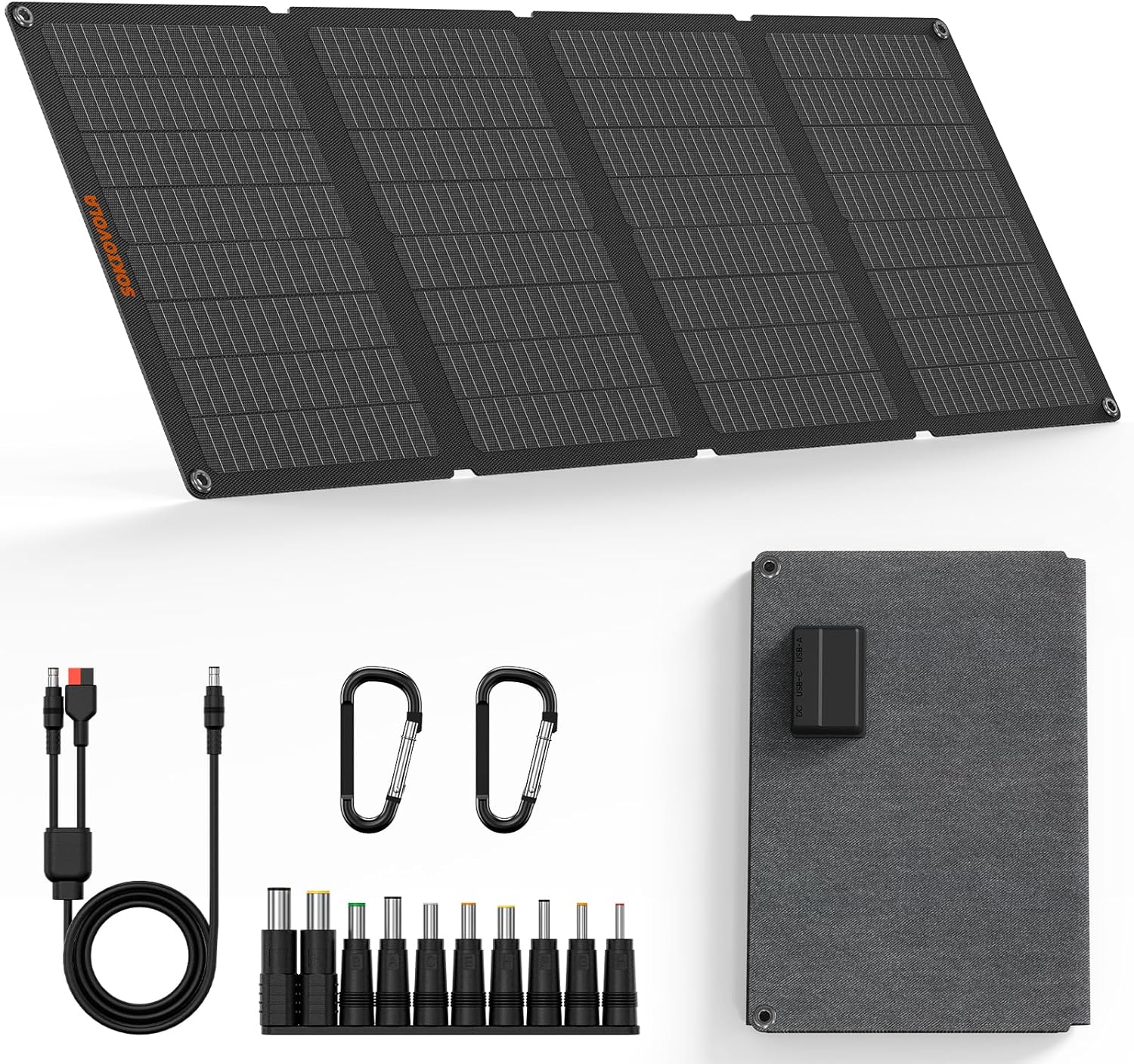
Tiny folded size with USB-C, USB-A, and DC outlets plus a cable pouch. If you just need to keep a phone and a GPS alive even on cloudy days, this is the space-saving pick.
???? Check the current price on Amazon
Common mistakes I see campers make
Laying the panel flat
You’re leaving 20%–40% of your power on the table. Tilt and re-aim.
Trusting “waterproof” labels
Check the actual IP rating. IP65 ≠ storm-proof.
Buying exactly the wattage you calculated
Real-world output is lower than rated. Size up.
Charging through a window
Glass blocks a large share of usable light, cutting output by half or more. Always charge in open air.
Ignoring connector compatibility
Confirm your panel and power station speak the same language (MC4, DC, USB-C PD) before the trip.
FAQ
Can camping solar panels charge in the rain or on cloudy days?
They keep working, just at much-reduced output, often 10%–25% of rated power under heavy cloud. For rain, only panels with an IP67/IP68 rating should be left out; lower-rated fabric panels can be permanently damaged.
What size solar panel do I need for camping?
For phones and small electronics, a 20W–50W panel with USB ports is plenty. For lights, fans, and a small cooler via a power station, plan on 100W–200W. Size up for real-world losses.
Do I need a power station?
Only if you’re powering anything beyond USB devices. Small panels with built-in USB ports charge phones and headlamps directly. Anything bigger needs a battery in between.
Monocrystalline or polycrystalline?
For portable camping use, go monocrystalline (or N-type). It’s more efficient per square inch, which means a lighter, smaller panel for the same power.
Want to go deeper on solar? I’ve broken down solar panel types, inverter selection, and off-grid system design elsewhere on Solar Futurista, all from someone who’s actually installed these systems, not just read the spec sheets.
Disclosure: Some links above are affiliate links. If you buy through them, I may earn a small commission at no extra cost to you. I only recommend gear I’d be comfortable using myself.
