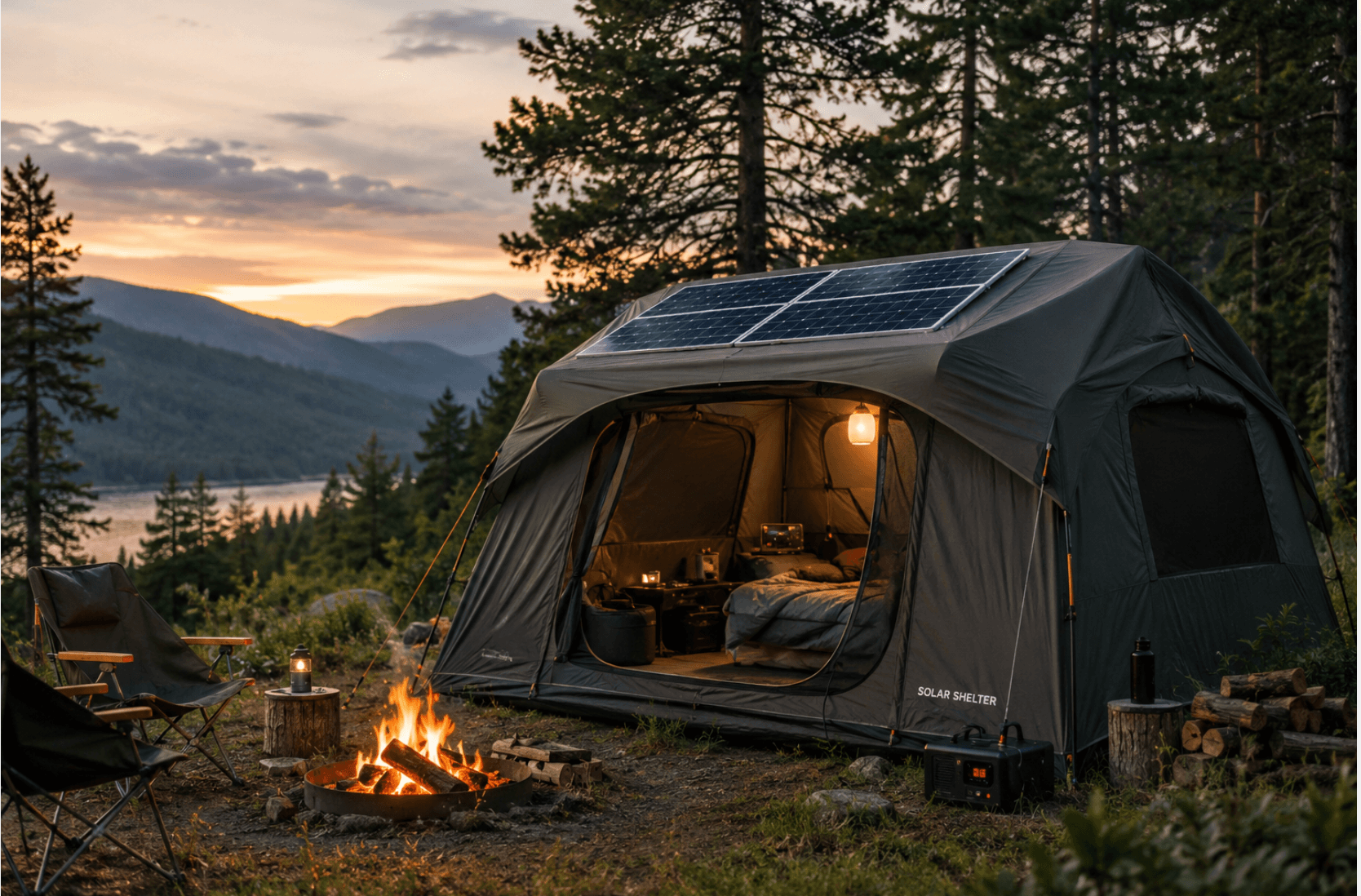
A solar-powered tent is a camping shelter that integrates photovoltaic panels, either built into the fabric or attached to the structure, to capture sunlight and convert it into usable electricity for charging phones, lights, fans, and small devices while you’re off the grid.
After years of working with photovoltaic systems professionally, I can tell you that the technology behind these tents is the same as that which powers rooftop arrays: it’s just been miniaturized, ruggedized, and packed down to fit in a backpack.
In this guide, I’ll walk through how solar tents actually work, what to look for before you buy, and whether one genuinely fits your camping style or whether a separate portable panel makes more sense.
What Is a Solar-Powered Tent?
At its core, a solar-powered tent pairs two things: a weatherproof shelter and a flexible (or semi-rigid) solar panel system.
The panel feeds a charge controller, which regulates voltage and routes power either directly to a USB output or into a battery bank for later use.
There are three common configurations
Integrated-panel tents
Thin-film or flexible panels sewn into the rainfly or roof. Lightweight but lower wattage.
Detachable-panel tents
A standard tent bundled with a removable panel you can angle toward the sun. More efficient because you can chase the light.
Solar-accessory tents
A normal tent is sold with a separate solar charger kit. Technically not “integrated,” but marketed under the same umbrella.
For most campers, the detachable approach delivers the best real-world performance, because a panel flat on a tent roof rarely sits at the optimal angle to the sun.
How Does a Solar Tent Actually Work?
The chain of energy is straightforward, and understanding it helps you avoid disappointment:
- Photovoltaic cells capture sunlight and produce DC electricity. Output is rated in watts (e.g., a 10W or 21W panel).
- A charge controller prevents overcharging and stabilizes the current.
- A battery bank or power station stores the energy so you have power after sundown.
- Output ports (USB-A, USB-C, sometimes 12V) deliver power to your devices.
The key number to watch is watt-hours (Wh), not just watts. A 20W panel in five hours of strong sun generates roughly 100Wh in ideal conditions, enough to recharge a smartphone several times, but nowhere near enough to run a portable fridge for long.
Manufacturers love to advertise peak wattage; real output is typically 60–75% of that figure once you account for cloud cover, panel angle, heat, and cable losses.
Who Should Buy a Solar-Powered Tent?
A solar tent makes the most sense if you:
- Camp for multiple days off-grid without access to power.
- Need to keep phones, GPS units, headlamps, or cameras charged.
- Value packing light over having abundant power.
- Camp in consistently sunny climates where panels can actually perform.
It’s a poorer fit if you’re a weekend car camper near outlets, if you camp in dense forest or frequent overcast regions, or if you need to power high-draw appliances.
In those cases, a dedicated portable power station paired with a foldable panel will outperform any tent-integrated solution.
What to Look For When Buying
Panel Wattage and Efficiency
Higher wattage means faster charging, but also more weight and cost. For phone-and-light duty, 10–25W is plenty. For running a fan, a small cooler, or charging a laptop, look at 40W and up, which usually means a detachable panel.
Battery Capacity
A tent with an integrated battery is convenient, but capacity is often modest. Check the milliamp-hour (mAh) or watt-hour (Wh) rating. For reference, a 10,000mAh bank (~37Wh) recharges most phones two to three times.
Build Quality and Weatherproofing
Look for a tent with a high waterproof rating (1,500mm+ hydrostatic head) and panels rated IP65 or better for water and dust resistance. Solar electronics and rain are a bad combination if the housing isn’t sealed properly.
Weight and Packability
Every watt of solar adds grams. Backpackers should weigh the convenience against the load; if you’re hauling gear far, a small detachable panel clipped to your pack while you hike often beats a heavy integrated tent.
Charge Controller Quality
A good controller protects your devices and your battery. Cheaper tents skimp here, which can mean slow charging or even damaged electronics over time.
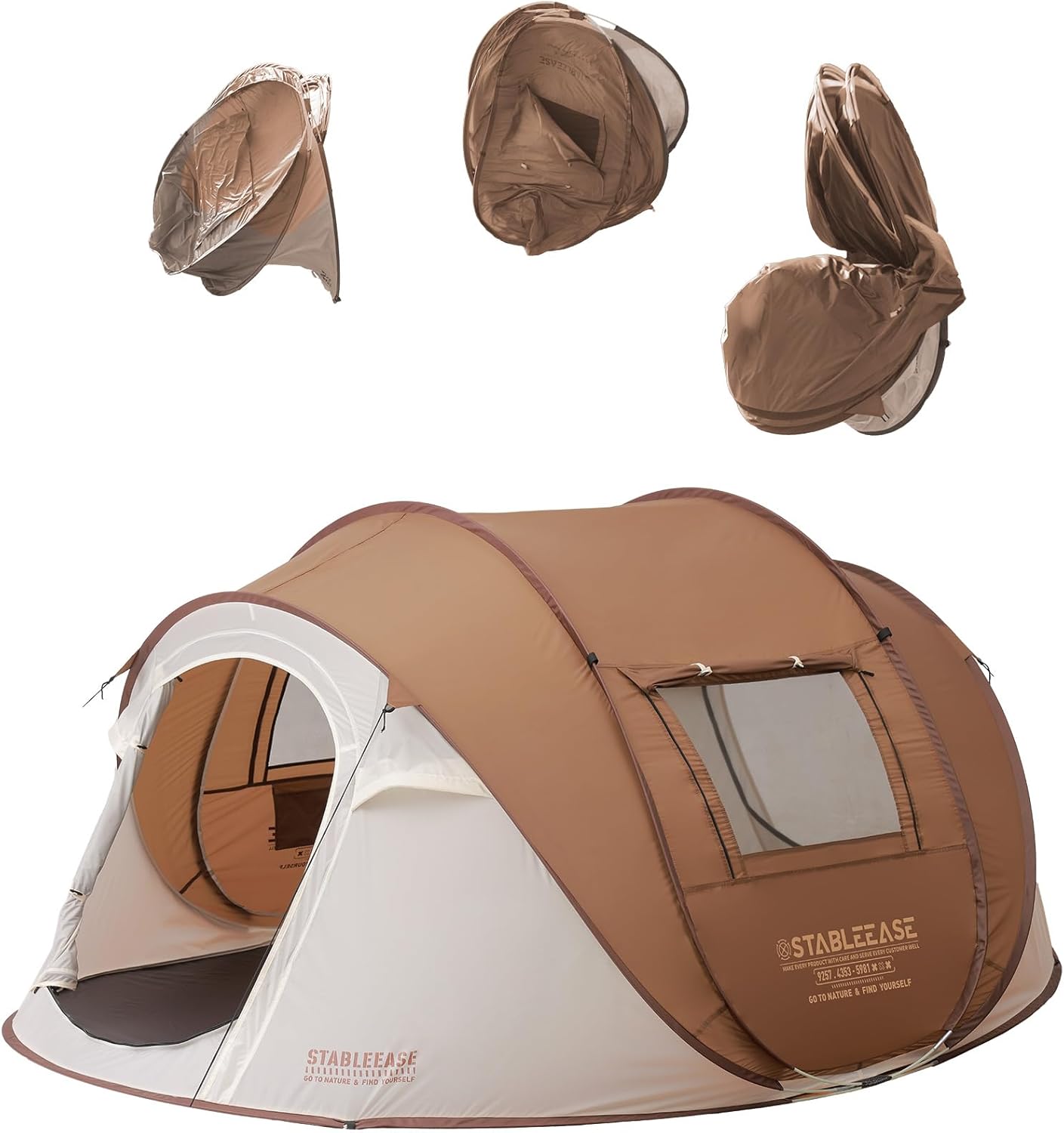
Solar-Powered Tent vs. Portable Solar Panel: Which Wins?
This is the question I get most often, and the honest answer is that for most campers, a separate portable panel is the smarter buy. Here’s why.
Sun tracking
A detached panel can be repositioned throughout the day; a tent roof can’t.
Flexibility
You can charge while hiking, then bring the panel back to camp.
Upgradeability
When panel tech improves, you replace just the panel, not the whole tent.
Redundancy
If the panel fails, you still have a perfectly good tent.
A true integrated solar tent shines mainly in one scenario: when you want an all-in-one, grab-and-go system and you’re willing to trade some efficiency for simplicity.
Tips to Maximize Output
Drawing on the same principles I apply to fixed solar installations.
Angle matters
Tilt detachable panels roughly toward the sun rather than laying them flat — even a rough angle beats horizontal.
Keep panels cool
Heat reduces efficiency. Allow airflow behind the panel where possible.
Wipe panels clean
Dust and pollen can cut output noticeably. A quick wipe each morning helps.
Charge a battery, not devices directly
Storing energy in a power bank lets you use it after sunset and smooths out cloud interruptions.
Position
Position camp for morning sun if you need devices ready for a day on the trail.
Frequently Asked Questions
Can a solar-powered tent charge a laptop?
Only if it has a high-wattage panel (40W+) and a battery with a USB-C PD or AC output. Most lightweight integrated tents cannot.
Do solar tents work on cloudy days?
Yes, but at greatly reduced output, often 10–25% of rated capacity. Plan for less power and rely on stored battery charge.
Are solar tents waterproof with the panels attached?
Quality models are available, but you must confirm the panel housing’s IP rating and the tent’s waterproof rating separately. Budget options sometimes compromise the seal where wiring enters.
How long does it take to charge a phone?
With a 20W panel in good sun, roughly 1.5–3 hours for a typical smartphone, depending on the phone’s battery and charging rate.
Final Verdict
A solar-powered tent is a genuinely useful piece of gear for multi-day, off-grid, sun-rich camping—but it’s not magic.
Understand the watt-hour math, prioritize a quality charge controller and weatherproofing, and be realistic about what a small panel can deliver.
For many campers, a regular tent paired with a detachable folding panel and a power bank delivers more usable energy for less money.
But if you want a tidy, all-in-one system and you camp where the sun shows up reliably, an integrated solar tent earns its place in your kit.
Disclaimer: As an Amazon Associate, I earn from qualifying purchases.
