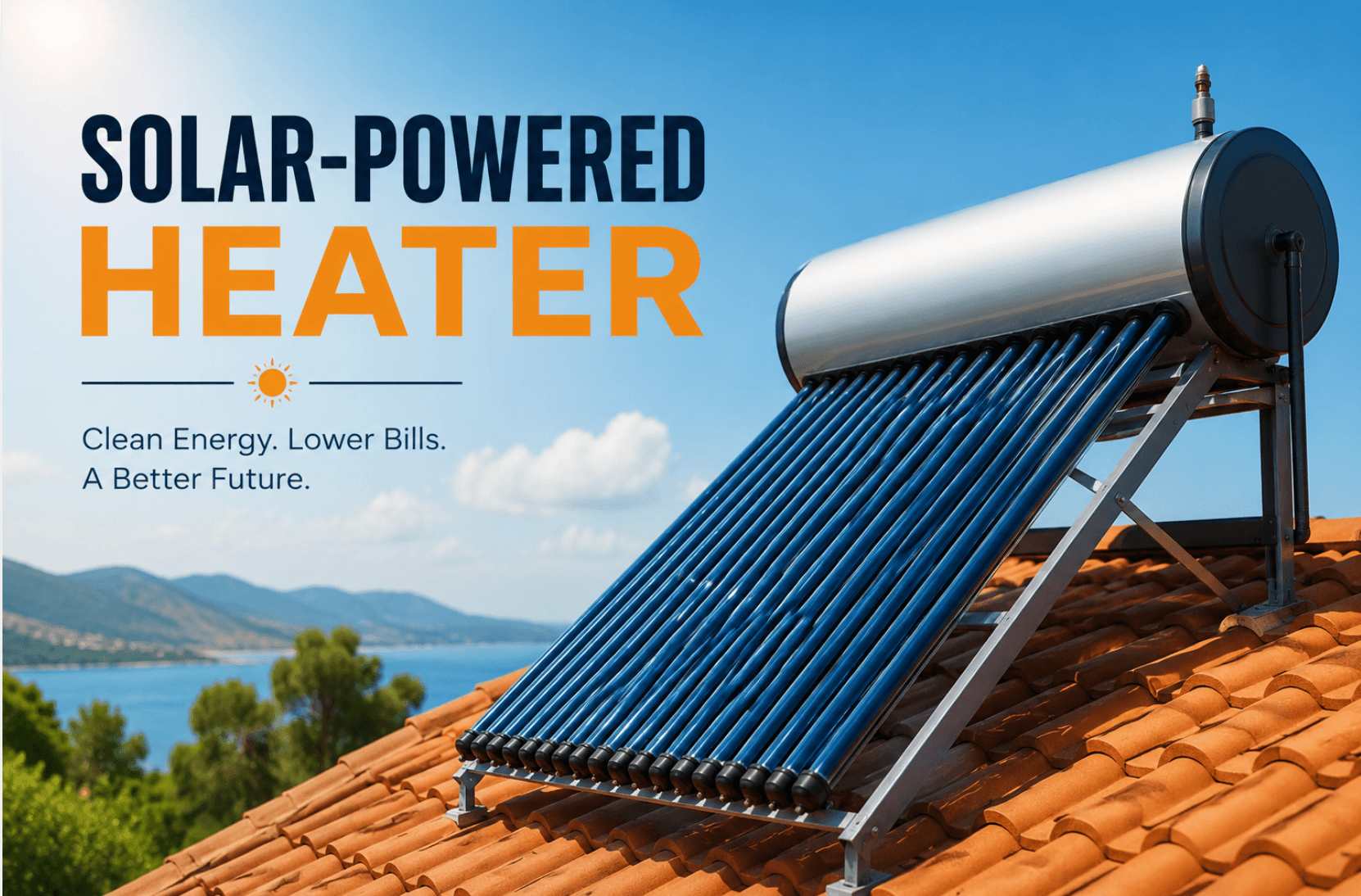
A solar-powered heater uses free energy from the sun to warm your home, water, or pool, cutting heating bills and shrinking your carbon footprint at the same time.
Whether you want to slash your winter gas bill, keep your pool comfortable months longer, or heat a workshop off-grid, there is a solar heating solution that fits.
This guide breaks down every type of solar-powered heater, how each one works, what it costs, and how to choose the right system for your needs.
What Is a Solar-Powered Heater?
A solar-powered heater is any device that captures sunlight and converts it into heat to warm air, water, or a living space.
Most systems use either solar thermal collectors that absorb sunlight directly as heat or solar electric (PV) panels that generate electricity to run an electric heating element or heat pump. Solar thermal is more efficient for pure heating, while PV-driven systems offer more flexibility.
Types of Solar-Powered Heaters
There are five main categories of solar-powered heaters, each designed for a different job.
Solar Air Heaters (Space Heating)
These collectors mount on a south-facing wall or roof and warm the air directly. A fan pushes cool room air through a dark absorber plate behind glazing, and the heated air flows back inside.
They are ideal for workshops, garages, cabins, and supplemental room heating, and many models are fully passive or solar-fan-powered, requiring zero grid electricity.
Solar Water Heaters
The most established solar heating technology worldwide. A flat-plate or evacuated-tube collector heats a fluid that transfers warmth to your domestic hot water tank. A well-sized system can cover 50–80% of a household’s annual hot water demand.
Solar Pool Heaters
Pool water is pumped through unglazed solar collectors, usually black polymer mats on the roof, where the sun warms it before it returns to the pool.
Because pool water only needs to be moderately warm, solar pool heating is one of the most cost-effective solar heating applications, often extending the swim season by two to four months.
PV-Powered Electric Heaters
Here, standard solar panels generate electricity that runs an electric space heater, infrared panel, or resistance element.
This approach pairs naturally with a home solar system and battery storage, letting you heat with stored daytime energy at night.
Solar-Assisted Heat Pumps
The most efficient modern option: solar PV powers a heat pump that delivers three to four units of heat for every unit of electricity.
This combination can heat your entire home and water supply with dramatically lower running costs than resistance heating.
Solar-Powered Heater Comparison Table
| Heater Type | Best For | Typical Cost (USD) | Efficiency |
| Solar Air Heater | Garages, cabins, rooms | $300–$2,000 | High (direct heat) |
| Solar Water Heater | Household hot water | $3,000–$9,000 | Very high |
| Solar Pool Heater | Pools & spas | $2,500–$6,000 | Excellent value |
| PV Electric Heater | Flexible heating | Varies + panels | Moderate |
| Solar Heat Pump | Whole-home heating | $8,000–$20,000+ | Highest (COP 3–4) |
Get top-rated solar heater picks here
How Does a Solar-Powered Heater Work?
The core principle is simple. Dark surfaces absorb sunlight and convert it to heat. A solar-powered heater maximizes this effect and moves the captured heat to where you need it:
- Sunlight strikes a dark absorber plate or collector tube.
- The absorber heats up and transfers warmth to air, water, or a circulating fluid.
- A fan, pump, or natural convection moves the heated medium into your space or tank.
- Insulation and (often) a glazing layer trap the heat and reduce losses.
PV-based systems work differently: the panels produce electricity, which then powers a conventional heating element or heat pump.
The advantage is that the same panels can also run lights and appliances and charge a battery, making PV the more versatile backbone for an all-electric home.
Benefits of a Solar-Powered Heater
- Lower energy bills: Sunlight is free, so once installed, running costs drop sharply.
- Reduced carbon footprint: Solar heating produces no direct emissions.
- Energy independence: Less reliance on the grid and volatile gas prices.
- Incentives and rebates: Many regions offer tax credits for solar thermal and PV systems.
- Long lifespan: Quality collectors and panels last 20–25 years with minimal maintenance.
How to Choose the Right Solar-Powered Heater
Match the system to the job before you compare brands or prices. Ask yourself:
- What am I heating? Air, domestic water, a pool, or the whole house?
- What is my climate? Evacuated tubes outperform flat plates in cold, cloudy regions.
- On-grid or off-grid? Off-grid favors passive solar air heaters and PV with batteries.
- What is my budget and payback target? Pool and air heaters pay back fastest; heat pumps cost more but heat everything.
- How much roof or wall space do I have? South-facing, unshaded exposure is essential.
Can You Build a DIY Solar-Powered Heater?
Yes. A DIY solar air heater built from a glazed box, a dark aluminum absorber, and a small PV-driven fan is one of the most popular weekend solar projects.
For a few hundred dollars in materials, you can warm a workshop or sunroom on cold, sunny days. Water and pool heating DIY kits also exist, though plumbing and freeze protection require more care.
For whole-home or pressurized water systems, professional installation is strongly recommended for safety and warranty coverage.
Maintenance and Lifespan
Solar-powered heaters are low-maintenance, but a few habits keep them running at peak efficiency:
- Clean collector glazing and panels two to four times per year.
- Check pumps, fans, and circulation fluid annually.
- Inspect seals and insulation for wear before winter.
- Drain or protect water systems in freezing climates.
Frequently Asked Questions
Do solar-powered heaters work in winter?
Yes. Solar collectors capture heat even on cold, clear days, and winter sun is often plenty for space and water heating.
Output drops on heavily overcast days, so most systems include a backup or are sized to supplement, not fully replace, conventional heating in extreme climates.
How much can a solar-powered heater save?
Savings vary by system and climate, but solar water heaters can cut water-heating costs by 50–80%, and solar pool heaters can virtually eliminate pool heating bills. Whole-home solar heat pumps deliver the largest absolute savings.
Are solar-powered heaters worth it?
For most homeowners with good sun exposure, yes, especially for pool and water heating, where payback periods are short. Available rebates and rising energy prices continue to improve the return on investment.
What is the most efficient type of solar-powered heater?
For pure heat output, solar thermal collectors (especially evacuated tubes) are most efficient. For overall home energy flexibility, a solar PV system paired with a heat pump delivers the best combination of efficiency and versatility.
Final Thoughts
A solar-powered heater is one of the smartest upgrades you can make to lower energy costs and live more sustainably.
Start by identifying what you need to heat, match it to the right technology, and factor in your climate and budget. Whether you choose a simple DIY air heater or a full solar heat pump system, the sun can carry a meaningful share of your heating load for decades to come.
