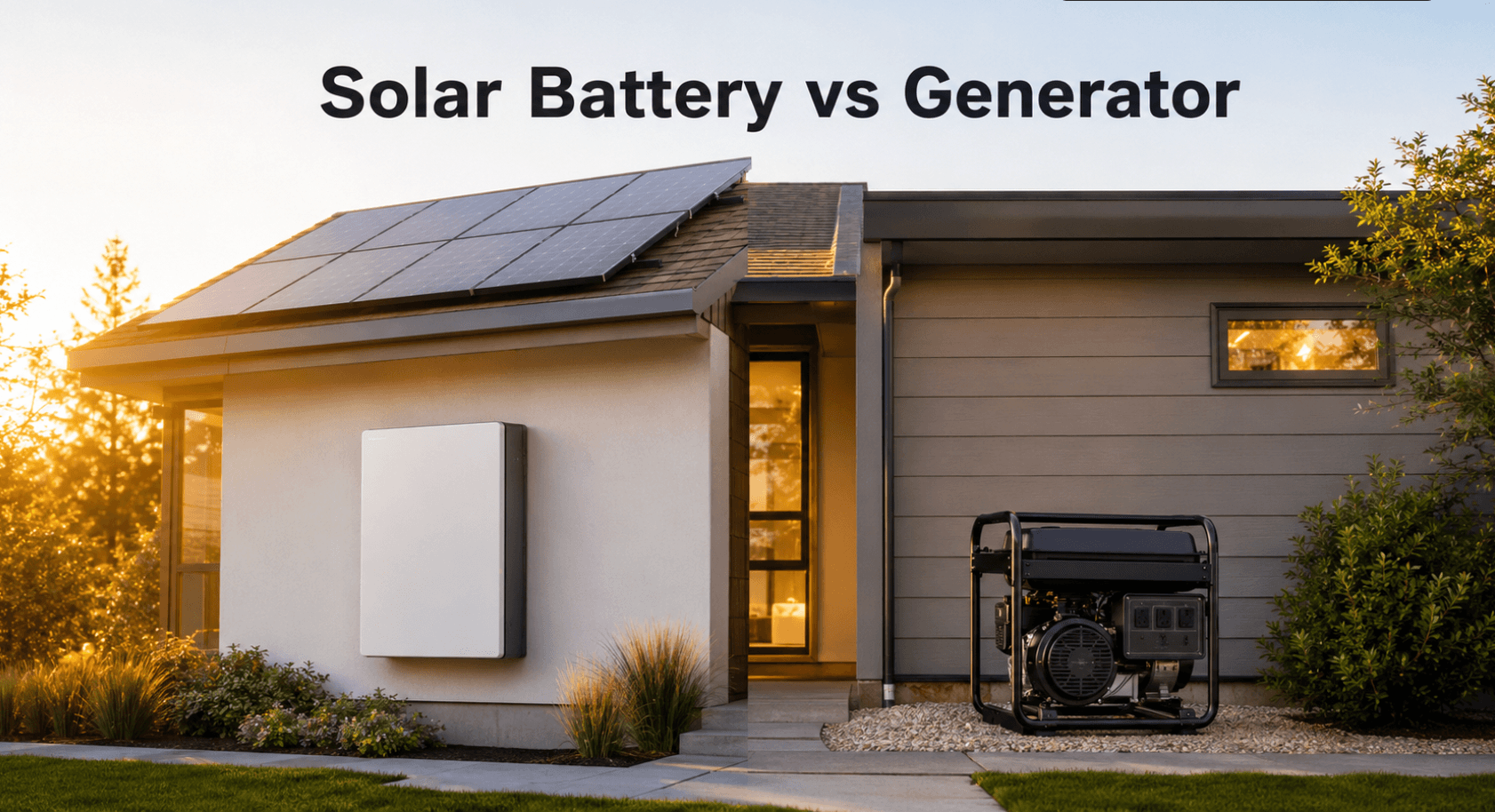
When the grid goes down, you have two realistic ways to keep your lights, refrigerator, and internet running: a solar battery system or a fuel-powered generator.
Both work. Both have passionate defenders. But they deliver backup power in fundamentally different ways, and the “better value” answer depends on how you actually use them.
I’m Seki Hudson, an ANCE-certified solar technician, and I’ve designed backup systems for homes where outages last twenty minutes and homes where they last three days.
In this guide, I’ll break down the real numbers: upfront cost, cost per outage hour, lifespan, maintenance, and total 10-year cost of ownership so you can decide which option genuinely earns its price tag in your home.
Solar Battery vs Generator: Which Gives Better Backup Value?
For homes with frequent short-to-medium outages (under 12 hours) and existing or planned solar panels, a solar battery delivers better long-term value because it works every single day, not just during blackouts.
For homes facing rare but multi-day outages with no solar plans, a standby generator remains the cheaper insurance policy.
Most homeowners underestimate how much daily value a battery adds and overestimate how “cheap” a generator really is once fuel and maintenance enter the picture.
Solar Battery vs Generator: Quick Comparison Table
| Factor | Solar Battery | Standby Generator | Portable Generator |
|---|---|---|---|
| Upfront cost (installed) | $9,000–$20,000 per unit | $7,000–$15,000 | $500–$2,500 |
| Fuel/energy cost | $0 (solar recharge) | $50–$150+ per day of runtime | $30–$80 per day |
| Runtime per outage | 8–24 hrs (extendable with solar) | Unlimited (while fuel flows) | Until the tank runs dry |
| Startup | Instant (<20 ms with most hybrid inverters) | 10–30 seconds automatic | Manual start |
| Noise | Silent | 60–70 dB | 70–90 dB |
| Emissions | None | CO, NOx exhaust | CO, NOx exhaust |
| Maintenance | Minimal (firmware, visual checks) | Oil, filters, annual service ($200–$500/yr) | Oil changes, carburetor care |
| Lifespan | 10–15 years (typically 10-yr warranty) | 15–20 years (with service) | 5–10 years |
| Daily value outside outages | Yes, bill savings, peak shaving | None | None |
| Incentives | 30% federal tax credit (US), local rebates | None | None |
That last row of daily value outside outages is where most comparisons go wrong, and it’s where we’ll spend serious time below.
How Each Backup System Actually Works
Solar Battery Backup
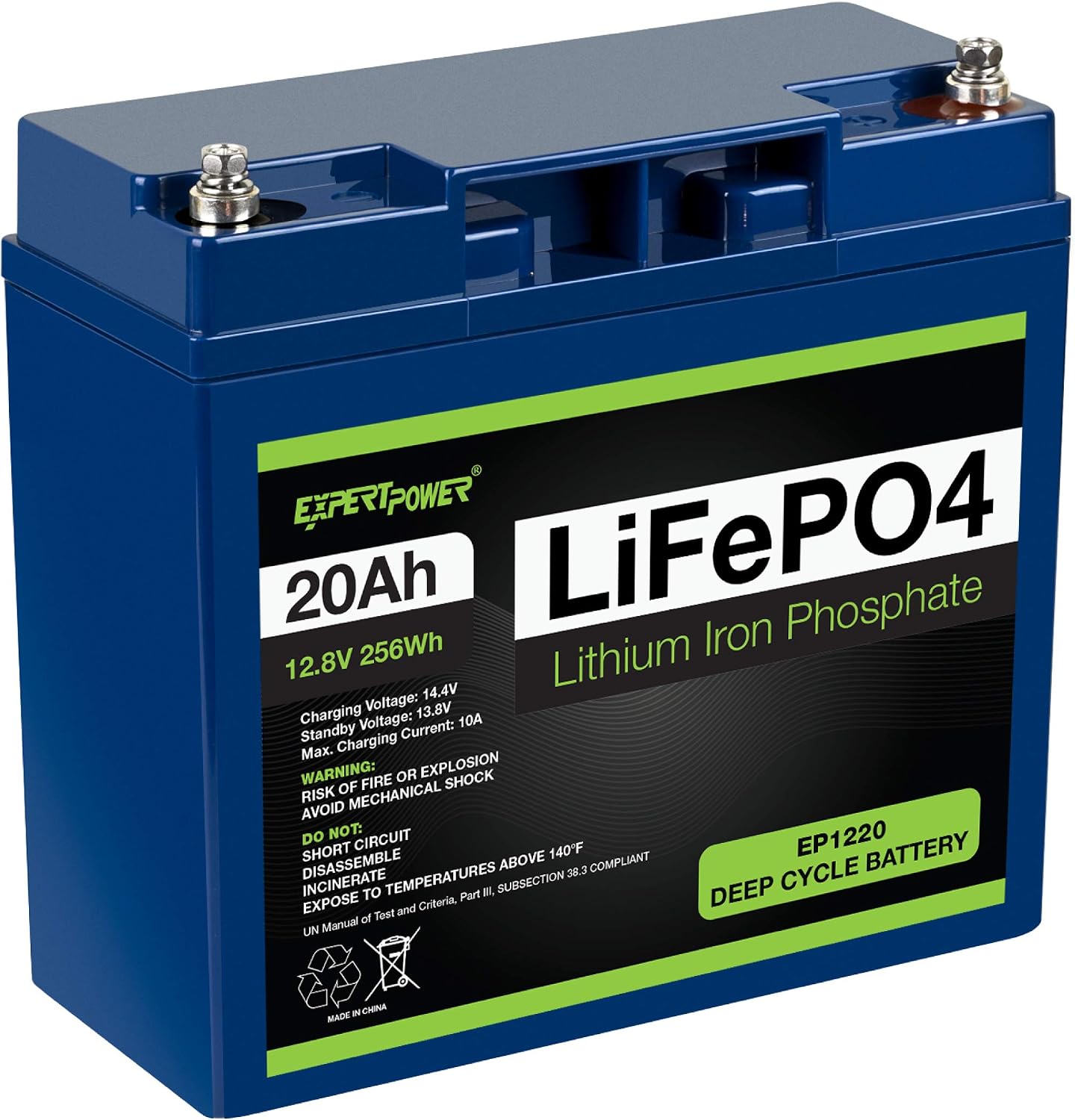
A solar battery system pairs a lithium battery (usually lithium iron phosphate, or LiFePO₄) with a hybrid or backup-capable inverter.
During normal operation, your solar panels charge the battery and power your home. When the grid fails, the inverter disconnects from the grid in milliseconds and keeps a protected load panel or your whole home, depending on system size, running seamlessly.
The critical detail many buyers miss: standard grid-tied solar without a battery shuts down during an outage.
Anti-islanding regulations require it for the safety of utility line workers. If backup power is your goal, the battery and backup-capable inverter are non-negotiable. I cover this in depth in my guide to how hybrid inverters work.
Because the sun recharges the battery every day, a properly sized solar battery can sustain essential loads indefinitely through a multi-day outage as long as you have decent sun and you manage consumption.
Fuel Generators
A standby generator is permanently installed, connected to natural gas or propane, and starts automatically via a transfer switch within seconds of an outage. It can run for days as long as fuel is supplied.
A portable generator is the budget option: it’s gasoline-powered, manually started, and connected through extension cords or a manual transfer switch.
It works, but it requires you to be home. Store fuel safely, and run it outdoors, never in a garage, because carbon monoxide from portable generators kills dozens of people every year.
Upfront Cost: Generator Wins on Paper
Let’s be honest about the sticker prices.
A whole-home standby generator (18–26 kW) typically lands between $7,000 and $15,000 installed, including the transfer switch and gas line work. A portable generator capable of running essentials costs $500–$2,500.
A solar battery installation, of one 10–13.5 kWh battery plus backup gateway, typically runs $9,000–$20,000 installed. Whole-home backup with two or three batteries can exceed $30,000 before incentives.
If we stopped the analysis here, the generator would win almost every time. But upfront cost is the least interesting number in this comparison.
The 30% Tax Credit Changes the Math
In the United States, standalone and solar-paired batteries (3 kWh and larger) qualify for the federal Residential Clean Energy Credit of 30%.
A $15,000 battery installation effectively costs $10,500 after the credit. Many states and utilities stack additional rebates on top California’s SGIP program being the best-known example.
Generators qualify for none of this. Their sticker price is their real price — and it’s only the entry fee, as we’ll see next.
(If you’re outside the US, check local incentives. Mexico, for example, offers accelerated depreciation for solar assets on business installations, and net billing rules that improve battery economics.
Running Costs: Where Generators Quietly Get Expensive
Here’s the line item generator brochures don’t emphasize.
Fuel Consumption During Outages
A 20 kW standby generator running on propane burns roughly 2–3 gallons per hour at half load. At typical propane prices, that’s $60–$150 per day of outage.
Natural gas is cheaper, often $20–$50 per day, but you’re still paying meaningful money every hour it runs. A single week-long outage can cost $400–$1,000 in fuel alone.
A solar battery’s “fuel” is sunlight. Recharge cost during an outage: $0.
Maintenance
Standby generators are combustion engines. They need:
- Oil and filter changes every 100–200 running hours (or annually)
- Spark plug and air filter replacement
- Weekly or monthly self-test cycles (which burn fuel)
- Professional annual service: $200–$500 per year
Over 10 years, expect $2,000–$5,000 in generator maintenance even if you barely use it. Batteries, by contrast, have no moving parts. Maintenance amounts to occasional firmware updates and keeping the unit clear of debris, effectively $0 in most years.
The Value Factor Nobody Talks About: Daily Use
This is the decisive difference, and it’s why I tell most solar clients that the battery-vs-generator question is really a question about how often the asset works for you.
A generator sits idle 99% of its life. It is pure insurance; it produces zero value between outages while still consuming maintenance dollars and monthly self-test fuel.
A solar battery works every single day
Time-of-use arbitrage
If your utility charges more in the evening, the battery charges from solar at midday and discharges during peak hours, cutting your bill daily.
Self-consumption
In areas with weak net metering (or net billing regimes that credit exports at low rates), storing your own solar instead of exporting it dramatically improves your solar ROI.
Demand changes
Peak shaving and demand charges for homes or small businesses on demand-based tariffs.
Virtual power plant (VPP) programs
A growing number of utilities pay battery owners for grid support, sometimes hundreds of dollars per year.
Depending on your tariff, a well-managed battery can return $500–$1,500 per year in bill savings and program payments.
Over ten years, that’s $5,000–$15,000 of value a generator simply cannot generate. The battery partially or fully pays for itself; the generator never does.
10-Year Cost of Ownership: A Realistic Scenario
Assumptions: a home with existing solar, moderate outages (four per year averaging 8 hours), US pricing.
| Cost Item (10 years) | Solar Battery (13.5 kWh) | Standby Generator (20 kW, propane) |
|---|---|---|
| Installed cost | $15,000 | $11,000 |
| Federal tax credit (30%) | –$4,500 | $0 |
| Fuel (10 yrs of outages) | $0 | $2,500–$4,000 |
| Maintenance | ~$0 | $2,500–$4,500 |
| Daily-use savings (10 yrs) | –$6,000 to –$12,000 | $0 |
| Net 10-year cost | $0 to $4,500 | $16,000–$19,500 |
The exact figures shift with your tariff, outage profile, and fuel prices, but the structure of the result rarely changes.
The battery’s daily earnings transform it from an expense into an asset. The generator remains a recurring cost center for its entire life.
Where the generator claws back the win: if your outages routinely last several days in cloudy weather, a single battery will run out, while a gas-fed generator keeps humming. Fuel-fed endurance is the generator’s genuine, defensible advantage.
Performance During an Outage: Head to Head
Switchover speed
Batteries switch in under 20 milliseconds; your Wi-Fi doesn’t blink, and your desktop doesn’t reboot. Standby generators take 10–30 seconds; sensitive electronics see a hard power cut.
Noise and placement
Batteries are silent and wall-mounted in a garage. Generators run at 60–70+ dB, roughly a running lawnmower outside your window, and many municipalities restrict where and when they can operate.
Power quality
Modern battery inverters produce clean sine-wave power. Generator output can fluctuate under changing loads, which stresses electronics over long outages.
Endurance
The generator wins outright here. Unlimited runtime on natural gas beats any battery in a prolonged, low-sun outage.
A battery + solar combo can also run indefinitely but only with sufficient sun and disciplined load management.
Safety
Batteries produce no emissions. Generators produce carbon monoxide and require correct outdoor placement and clearances. Portable units, misused, are genuinely dangerous.
Which Should You Choose? Decision Framework
Choose a solar battery if
- You already have (or plan to install) solar panels
- Your outages are frequent but usually under 24 hours
- Your utility has time-of-use rates, weak export credits, or a VPP program
- You value silent, instant, emission-free backup
- You want your backup investment to produce returns every day
Choose a standby generator if
- You face rare but multi-day outages (hurricane or ice-storm country)
- You have cheap natural gas at the meter
- You have no interest in solar and want the lowest upfront backup cost
- You need to power very large loads (well pumps, big HVAC) for days at a time
Choose both (the hybrid setup) if
- You want the best of both worlds: the battery handles the daily work and 95% of outages silently, while a smaller generator serves as the deep-reserve backstop for worst-case events. Several hybrid inverters accept a generator input for exactly this architecture. For critical-uptime homes, this is what I actually recommend.
FAQ: Solar Battery vs Generator
Is a solar battery cheaper than a generator?
Upfront, no, a solar battery typically costs more than a standby generator. Over 10 years, yes for most homes: the 30% tax credit, zero fuel cost, near-zero maintenance, and daily bill savings usually make the battery the cheaper option in total cost of ownership.
Can a solar battery power a whole house?
One 10–13.5 kWh battery comfortably backs up essentials (refrigerator, lights, internet, outlets) for 8–24 hours.
Whole-home backup including air conditioning generally requires two to three batteries and careful load management.
How long can a solar battery last during a blackout?
On battery alone, typically 8–24 hours depending on load. Paired with solar panels that recharge it daily, a battery can sustain essential loads indefinitely through multi-day outages, provided there’s reasonable sunshine.
Do solar panels work during a power outage without a battery?
No. Standard grid-tied solar systems shut down during outages for utility worker safety. You need a battery with a backup-capable (hybrid) inverter to use solar power during a blackout.
Which lasts longer, a battery or a generator?
Standby generators can last 15–20 years with diligent maintenance; solar batteries typically carry 10-year warranties and last 10–15 years.
However, the generator’s longer life comes with annual service costs, while the battery’s shorter life comes with daily earnings.
Is it worth having both a battery and a generator?
For homes in outage-prone regions, yes. The battery handles daily savings and short outages silently and instantly; the generator provides unlimited endurance for rare multi-day events. Many hybrid inverters integrate a generator input natively.
Final Verdict: Value Depends on How Often the Asset Works
If “backup value” means the cheapest possible insurance against a rare catastrophe, a standby generator on natural gas still wins as long as you accept fuel bills, annual servicing, noise, and an asset that earns nothing between emergencies.
But if “backup value” means the most total value returned per dollar spent, the solar battery wins for the majority of solar-owning homes.
It protects you during outages and pays you back every day in between, something no generator can do.
After incentives and a decade of bill savings, many battery systems approach a net cost of zero while the generator quietly accumulates $16,000+ in lifetime expenses.
My professional recommendation: size a battery for your essential loads first, verify your utility’s rate structure to capture daily savings, and add a generator input only if your outage history genuinely demands multi-day endurance.

3 thoughts on “Solar Battery vs Generator: Which Gives Better Backup Value?”