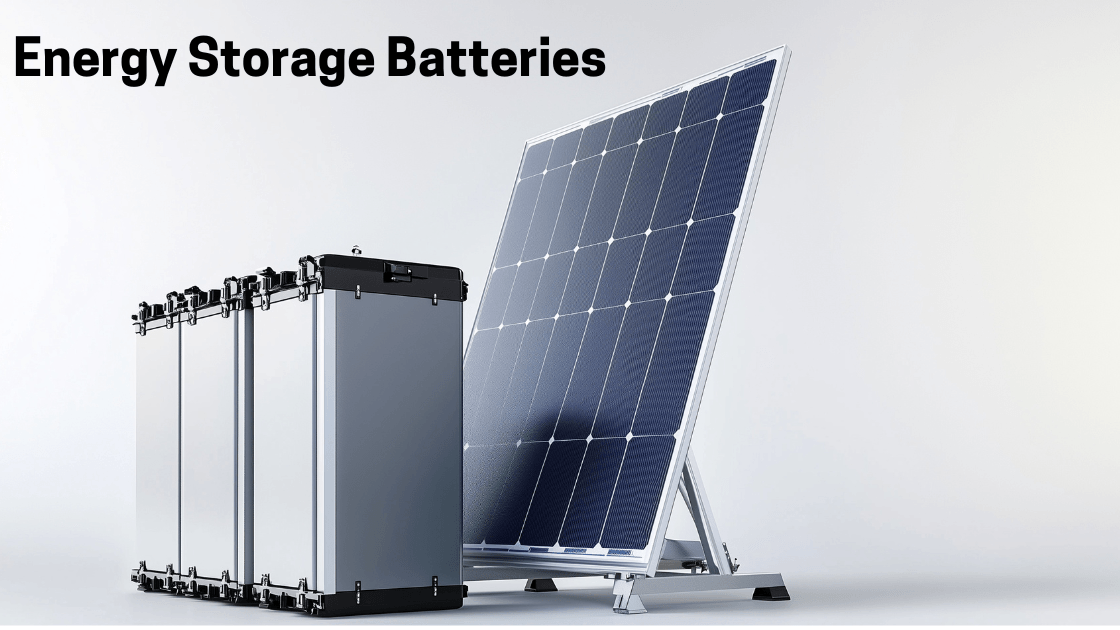
For most of the last decade, the electric vehicle was the story of the battery world. Every gigawatt-hour of cell manufacturing seemed pointed at cars.
But something quietly flipped in 2025: stationary energy storage batteries are now growing faster than EV batteries, and the gap is widening.
As a solar technician, I watch this closely because grid and home storage are where solar power meets its most important partner.
If you’ve wondered why battery storage suddenly dominates the clean-energy headlines, here’s the full picture, backed by the latest 2025 numbers.
Why Energy Storage Batteries Are Growing Faster Than EV Batteries
Battery demand from stationary storage jumped 51% in 2025, versus 26% growth for EV-related demand, according to Benchmark Mineral Intelligence.
That’s roughly double the growth rate. Storage has quietly become the fastest-growing major end-use for lithium-ion batteries on the planet.
The reasons come down to five forces: data-center electricity demand, cheaper LFP chemistry, solar’s explosive growth, faster build times, and a softening EV market in some regions. Let’s unpack each.
The Numbers: Storage Is Pulling Ahead
The scale of the shift is easy to underestimate until you see it laid out.
| Metric | Energy Storage (BESS) | EV Batteries |
|---|---|---|
| 2025 demand growth | ~51% | ~26% |
| 2025 global storage deployment | ~108 GW of new capacity (40% more than 2024) | — |
| Installed storage capacity vs. 2021 | 11× higher | — |
| 2025 US new storage capacity | 57.6 GWh (record) | EV car sales fell ~2% in the US |
| Global Li-ion demand (2025) | 1.59 TWh total, storage the fastest-growing segment | — |
According to the International Energy Agency, battery storage is now the fastest-growing power technology in the world, with about 108 GW of new capacity deployed in 2025, more new capacity than the largest-ever annual additions of natural gas. Installed storage capacity is now eleven times higher than it was in 2021.
Meanwhile, EV batteries are still growing. Electric car sales rose more than 20% globally in 2025, but the rate of growth for stationary storage has decisively overtaken it.
Data Centers Are the New Growth Engine
The single biggest surprise of 2025 was artificial intelligence data centers. Their appetite for electricity is enormous and, crucially, unpredictable, with huge spikes in demand that the grid struggles to serve with generation alone.
Battery storage smooths those spikes. It lets operators bank energy when it’s cheap or abundant and release it during peak load.
Load-growth projections tied to data centers have quadrupled in just two years in some estimates, and storage is the tool that makes existing grid capacity go further.
This is why major manufacturers are literally converting EV battery lines into storage lines. Ford announced plans to retool a Kentucky EV battery plant to build storage systems instead, citing “large demand for battery energy storage from data centers.” When the automakers themselves pivot toward storage, you know the balance has shifted.
LFP Chemistry Made Storage Cheap
EV batteries and storage batteries increasingly use different chemistries, and that difference is central to the story.
Lithium-iron-phosphate (LFP) batteries now account for around 90% of storage deployments. Just five years ago, LFP’s share was well below 50%.
LFP is less energy-dense than the nickel-based chemistries favored in premium EVs, which matters when you’re trying to squeeze range into a car, but for a stationary battery sitting in a field or a garage, energy density is almost irrelevant.
What matters for storage are the following
- Lower cost per kWh
- Longer cycle life (better for frequent daily charging and discharging)
- Better thermal safety
A grid battery doesn’t need to be light or compact. It needs to be cheap and durable. LFP delivers exactly that, which is why storage economics improved faster than EV economics.
Solar Growth Demands Storage
This is the part closest to my own work. In 2025, solar PV became the largest single contributor to growth in global energy supply for the first time.
But solar has an obvious problem: it produces power when the sun shines, not necessarily when you need it.
Storage solves the mismatch. The IEA notes that “energy shifting”, storing large volumes of solar energy for later use, has grown from about 40% of new battery projects in 2015 to more than 90% in 2025.
Batteries are no longer just a grid-stabilizing gadget; they’re the mechanism that lets solar run the show after sunset.
Every new solar farm strengthens the case for a battery beside it. As solar scales, storage scales with it, and solar is scaling faster than almost anything else in energy.
For solar homeowners
This same logic applies to your roof. Pairing panels with an LFP home battery is what turns daytime generation into round-the-clock energy independence. It’s why residential storage attach rates keep climbing.
Storage Builds Faster Than Almost Anything
There’s a practical, unglamorous reason storage is winning: speed of deployment.
A utility-scale battery project typically takes around two years to develop and commission, far faster than a gas plant, a nuclear reactor, or new transmission lines.
In an era where grids need flexible capacity now, that short timeline is a decisive advantage. Around 80% of new battery capacity in 2025 was utility-scale, deployed precisely because it could come online quickly.
The EV Market Cooled in Key Regions
Finally, part of the story is relative. EV growth didn’t collapse, but it slowed in important markets. In the United States, electric car sales fell about 2% in 2025, largely due to the elimination of federal tax credits and emissions fines.
Battery makers who had invested in US EV supply chains needed somewhere to put that capacity. Storage, with its booming, subsidy-resilient demand, became the natural destination. Stationary storage accounted for one-third of all battery deployment in the US in 2025.
What This Means Going Forward
The trend isn’t slowing. InfoLink Consulting projects the world will add another 353 GWh of storage capacity in 2026, up from 275 GWh in 2025, driven heavily by AI data-center demand. China alone accounts for roughly two-thirds of global installed storage capacity, led by manufacturers like CATL and BYD.
For anyone in the solar world, the message is clear: storage is no longer the sidekick to solar. It’s becoming the main event. The battery industry’s center of gravity is shifting from the driveway to the grid and the garage wall.
Frequently Asked Questions
Are energy storage batteries the same as EV batteries?
Not usually. Modern storage systems overwhelmingly use LFP (lithium-iron-phosphate) chemistry, which is cheaper, longer-cycling, and safer but less energy-dense.
EVs, especially longer-range models, more often use nickel-based chemistries prized for their higher energy density.
Is energy storage really growing faster than EVs?
Yes. In 2025, stationary storage battery demand grew about 51% versus roughly 26% for EV-related demand, nearly double the rate. Storage is now the fastest-growing end-use for lithium-ion batteries worldwide.
Why is battery storage growing so fast?
The main drivers are surging electricity demand from AI data centers, cheaper LFP chemistry, the rapid growth of solar power that needs storage to be useful after dark, fast project build times, and a cooling EV market in some regions freeing up manufacturing capacity.
Does this affect home solar batteries?
Yes, positively. The same cheap, durable LFP chemistry driving grid storage is what makes home batteries increasingly affordable. As storage manufacturing scales, residential battery prices tend to follow the downward trend.
Will EV batteries stop growing?
No. EV batteries are still growing strongly. Global electric car sales rose more than 20% in 2025. Storage is simply growing faster. Both markets are expanding; the relative momentum has shifted toward storage.
