If you’ve been researching solar energy long enough, you’ve probably come across the term “hybrid solar power system” and wondered how it’s different from a standard rooftop setup.
The short answer: it’s smarter, more resilient, and increasingly within reach for homeowners and small businesses who want the best of both worlds, grid reliability and battery-backed independence.
In this guide, we break down exactly how hybrid solar systems work, what they cost in 2026, their real advantages and disadvantages, and most importantly, whether one makes sense for your specific situation.
What Is a Hybrid Solar Power System?
A hybrid solar power system combines photovoltaic (PV) solar panels, a battery storage bank, and a connection to the utility grid, all managed by a smart hybrid inverter.
The name comes from the fact that it draws from multiple energy sources: solar generation, stored battery power, and the public grid.
This distinguishes it from
- Grid-tied solar systems: connected to the grid but with no battery backup; you lose power if the grid goes down
- Off-grid solar systems: fully battery-dependent with no grid connection; requires significant oversizing to cover cloudy days and seasonal variation
- Hybrid systems: the middle path: you store excess solar energy locally, draw from the grid only when needed, and maintain power during outages
The hybrid approach has grown rapidly in popularity alongside the falling cost of lithium-ion batteries, making what was once a luxury option increasingly practical.
How Hybrid Solar Power Systems Work
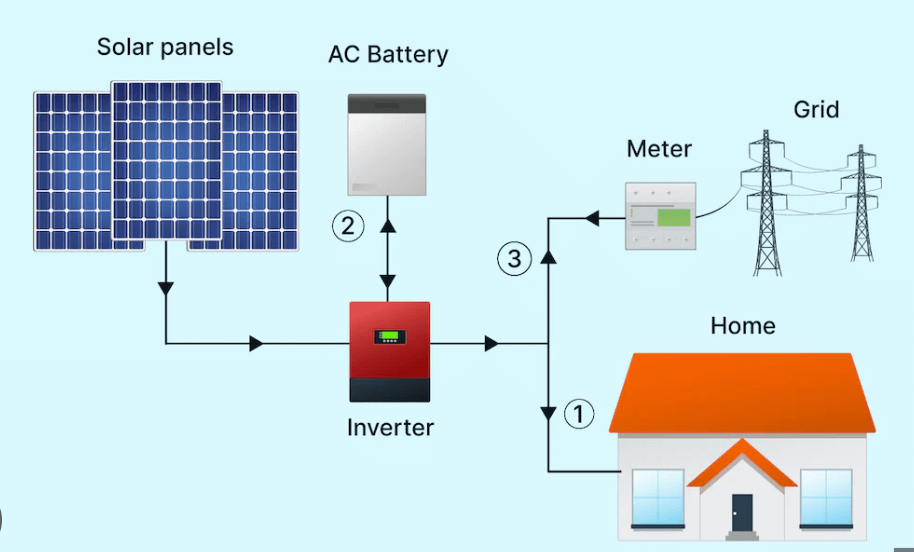
Understanding a hybrid system means understanding the flow of energy through it, which follows a clear priority logic.
Solar Generation (First Priority)
During daylight hours, your solar panels generate DC electricity. This flows into the hybrid inverter, which converts it to AC power that your home or business can use in real time.
Battery Charging (Second Priority)
Any solar energy your property doesn’t immediately consume gets directed to charge the battery bank.
Modern lithium iron phosphate (LiFePO₄) batteries used in systems like the Tesla Powerwall, Enphase IQ Battery, or Sungrow SBR series can charge and discharge thousands of times with minimal degradation.
Grid Export (Third Priority, If Applicable)
Once the battery is full, surplus electricity can be exported to the grid. Depending on your utility and local net metering policy, you may receive a credit or payment for this exported power.
Battery Discharge (Evening / Peak Hours)
After sunset, your home draws from the battery first, avoiding grid electricity during peak pricing hours when rates are highest.
Grid as Backup
If solar generation is low and batteries are depleted (during extended cloudy periods, for example), the system seamlessly draws from the grid. The transition is typically imperceptible, usually less than 20 milliseconds.
Backup Power During Outages
This is the feature that sets hybrid systems apart from basic grid-tied solar. When the grid goes down, the hybrid inverter disconnects your home, disconnecting from the grid and running entirely on solar and battery. Depending on battery capacity and your consumption, this backup can last hours to days.
Key Components of a Hybrid Solar System
| Component | Function |
|---|---|
| Solar PV Panels | Generate DC electricity from sunlight |
| Hybrid Inverter | Converts DC to AC; manages energy flow between panels, battery, grid, and loads |
| Battery Bank | Stores excess solar energy for later use |
| Battery Management System (BMS) | Monitors cell health, temperature, and charge cycles |
| Smart Meter / Gateway | Monitors consumption and communicates with utility for net metering |
| Backup Load Panel (optional) | Isolates critical circuits for emergency power |
Types of Hybrid Inverters
Not all hybrid systems are built the same. The inverter architecture matters:
- AC-coupled systems: The battery inverter connects on the AC side. Easier to retrofit onto an existing solar installation. Brands: Enphase and SolarEdge, with a separate battery.
- DC-coupled systems: The battery and panels both connect on the DC side of a single inverter. More efficient overall. Brands: SMA Sunny Boy Storage, Victron, GoodWe.
- All-in-one systems: Inverter, battery, and BMS in one unit. Simpler installation, ideal for smaller homes. Example: Alpha ESS, EcoFlow Power Kits.
How Much Do Hybrid Solar Power Systems Cost?
Cost is where the conversation gets serious. Hybrid systems carry a higher upfront price than basic grid-tied setups, but the economics are shifting fast.
Typical Cost Ranges (2026, Installed)
| System Size | Approximate Installed Cost (USD) |
|---|---|
| Small (5 kW solar + 5 kWh battery) | $12,000 – $18,000 |
| Medium (8–10 kW solar + 10–15 kWh battery) | $20,000 – $32,000 |
| Large (12–15 kW solar + 20–30 kWh battery) | $35,000 – $55,000+ |
Note: Prices vary significantly by country, installer, panel brand, and battery chemistry.
What Drives the Cost Difference?
The battery bank is the dominant cost premium over a standard grid-tied system. Lithium-ion battery storage typically adds $8,000–$18,000 to a project, depending on capacity.
However, this premium is offset.
- Federal Investment Tax Credit (ITC) in the U.S.: a 30% tax credit through 2032 applies to both solar and battery storage when the battery is charged 100% from solar
- State and local incentives, additional rebates available in California (SGIP), New York (ConEd/NY-Sun), and others
- Time-of-use (TOU) savings, using stored battery power during peak rate hours, reduce electricity bills significantly
- Virtual power plant (VPP) programs, some utilities pay homeowners to dispatch their battery during grid stress events
Payback Period
A typical hybrid system in a U.S. market with net metering and moderate electricity prices sees a payback period of 7–12 years, with a system lifespan of 25+ years for panels and 10–15 years for the battery (often under warranty for 10 years).
In markets with high electricity rates (Hawaii, California, Germany, and Australia), payback periods compress to 5–8 years.
Pros of Hybrid Solar Power Systems
✅ Energy Independence and Grid Resilience
Hybrid systems provide genuine backup power during outages, something a standard grid-tied system cannot. This matters increasingly as extreme weather events make grid reliability less certain.
✅ Maximized Self-Consumption
Instead of exporting excess solar to the grid at low feed-in rates, you store it and use it yourself, displacing electricity you’d otherwise buy at full retail price. This is especially valuable where net metering compensation rates have been reduced.
✅ Time-of-Use Optimization
Smart hybrid inverters can be programmed to charge batteries during off-peak hours (when grid electricity is cheap) and discharge during peak hours. This strategy, called peak shaving, reduces your electricity bill even on low-solar days.
✅ Future-Proofing
A hybrid system with a solid battery platform gives you the infrastructure to add an EV charger, a heat pump, or additional panels later, expanding your system as your needs grow.
✅ Lower Carbon Footprint
By maximizing solar self-consumption and reducing grid dependency, hybrid system owners typically achieve greater emissions reductions than grid-tied-only users.
✅ Generator Integration
Many hybrid inverters can accept input from a diesel or gas generator, making them ideal for properties in regions with unreliable grid infrastructure.
Cons of Hybrid Solar Power Systems
❌ Higher Upfront Cost
The battery component adds high cost. For homeowners without available capital or who don’t qualify for financing, the initial investment can be a barrier.
❌ Battery Degradation
Batteries don’t last as long as solar panels. Most lithium-ion batteries carry 10-year warranties and may need replacement before the solar array does, adding a long-term cost consideration.
❌ Complexity and Maintenance
More components mean more potential failure points. Hybrid systems require proper sizing, professional installation, and occasional maintenance, particularly of the battery management system.
❌ Not Always the Most Cost-Effective Option
In regions with strong net metering policies (where the utility pays you close to the retail rate for excess solar), a basic grid-tied system may offer a better financial return with lower upfront investment. Running the numbers with a solar professional for your specific utility is essential.
❌ Space Requirements
Battery banks take up physical space, typically requiring wall-mounted units in a garage, utility room, or outdoor enclosure. Multi-battery setups for larger homes can require significant floor or wall space.
❌ Efficiency Losses
Every energy conversion step introduces losses. DC-coupled systems minimize this, but AC-coupled setups can lose 5–10% of energy through the extra conversion cycles.
Hybrid vs. Off-Grid vs. Grid-Tied: A Quick Comparison
| Feature | Grid-Tied | Hybrid | Off-Grid |
|---|---|---|---|
| Battery Storage | ❌ No | ✅ Yes | ✅ Yes (required) |
| Grid Connection | ✅ Yes | ✅ Yes | ❌ No |
| Backup During Outages | ❌ No | ✅ Yes | ✅ Yes |
| Net Metering Eligible | ✅ Yes | ✅ Yes | ❌ No |
| Upfront Cost | Lowest | Medium-High | Highest |
| Grid Independence | Low | Medium-High | Full |
| Best For | Grid-reliable areas, max ROI | Most homeowners | Remote properties |
When Does a Hybrid Solar System Make Sense?
A hybrid system isn’t the right answer for everyone. Here’s how to think about it.
You’re a Strong Candidate If
Your grid is unreliable
Frequent outages from storms, aging infrastructure, or rolling blackouts make the backup power capability genuinely valuable, not just a nice-to-have.
Your utility has poor net metering
If your local utility pays you only 3–5 cents per kWh for exported solar but charges you 20–30 cents to buy it back, storing that energy yourself is clearly better economics.
You’re in a time-of-use rate structure
If your peak electricity rates are 2–3× your off-peak rates, a battery that absorbs cheap overnight grid power or solar and discharges it during expensive hours can pay for itself faster than expected.
You care about energy independence
Some homeowners and businesses are willing to pay a premium for the peace of mind of knowing they can power essential loads regardless of what happens on the grid.
You’re adding an EV
A hybrid system allows you to charge your electric vehicle with solar energy stored during the day, rather than pulling from the grid at peak evening rates.
You’re in a commercial or agricultural setting
Demand charges, where commercial utilities bill based on peak 15- or 30-minute consumption intervals, can be dramatically reduced with battery peak shaving.
A Basic Grid-Tied System May Be Better If
- Your utility offers true 1:1 net metering (retail rate for every kWh you export)
- Your grid is highly reliable, and outages are rare or brief
- Your primary goal is maximum financial ROI with minimum upfront investment
- You plan to move within 5–7 years (though solar adds to resale value in most markets)
Choosing the Right Hybrid Solar System: Key Decisions
Capacity Sizing
Start with your average daily consumption (in kWh) and identify which loads you want to cover during an outage.
A 10 kWh battery, for example, can run essential loads (refrigerator, lights, router, phone charging) for 12–24 hours without solar input.
Battery Chemistry
Lithium iron phosphate (LiFePO4) is the current industry standard for residential hybrid systems: safer than earlier lithium chemistries, longer cycle life (3,000–6,000 cycles), and better thermal stability.
Inverter Brand and Ecosystem
Commit to a reputable ecosystem. The inverter manufacturer’s monitoring platform, warranty support, and software updates matter over a 10+ year system life. Leading brands in 2025 include SolarEdge, Enphase, SMA, Fronius, Sungrow, and Victron.
Critical Loads Panel
For backup power, decide in advance which circuits you want protected. A dedicated critical loads subpanel lets your installer ensure those circuits, your refrigerator, medical devices, internet router, and lighting always stay on during an outage without requiring your battery to power your entire home.
The Future of Hybrid Solar Systems
The hybrid solar market is growing fast and getting smarter. Emerging developments worth watching:
Vehicle-to-Home (V2H) / Vehicle-to-Grid (V2G)
Bidirectional EV chargers allow your electric vehicle’s large battery pack to function as a home backup system, potentially reducing or eliminating the need for a separate battery installation.
AI-powered energy management
Next-generation hybrid inverter software uses weather forecasting, utility pricing signals, and machine learning to optimize charge/discharge schedules automatically.
Virtual Power Plants (VPPs)
Utilities and aggregators are building networks of home battery systems that can be dispatched collectively to support the grid and pay homeowners for participation. Tesla Energy Plan, Sunrun’s Shift program, and others are already live in multiple U.S. markets.
Falling battery costs
Residential battery storage costs have fallen roughly 90% over the past decade and are projected to continue declining, making the hybrid premium increasingly narrow.
Final Verdict: Is a Hybrid Solar System Worth It?
For most homeowners evaluating solar in 2026, a hybrid system deserves serious consideration not just for the environmental benefit, but for the tangible financial and practical value it delivers.
If you live somewhere with unreliable power, rising electricity rates, poor net metering, or time-of-use pricing, the math often favors going hybrid from the start rather than adding a battery later (retrofitting is possible but typically more expensive than installing together).
If your grid is rock-solid and net metering is generous, a simpler grid-tied system may still offer a better financial return.
The best approach: get quotes for both configurations from multiple certified installers. Reputable installers will run your actual consumption data against your local utility rates and provide a clear 10–25 year projection for each option.
The sun is the fuel. The question is just how smart you want your system to be about using it.
Frequently Asked Questions
How long can a hybrid solar system power a home during an outage?
It depends on battery capacity and your consumption. A 10–13.5 kWh battery (one Tesla Powerwall 3 or equivalent) running essential loads can typically last 12–24 hours without any solar input. On a sunny day with active solar generation, a properly sized system can run indefinitely.
Can I add a battery to my existing grid-tied solar system?
Yes, in most cases. AC-coupled battery systems like the Enphase IQ Battery or sonnen ecoLinx are designed specifically for retrofitting.
However, it’s often more cost-effective and efficient to install solar + battery together as a DC-coupled hybrid system.
Do hybrid solar systems work during a power outage?
Yes, this is one of their primary advantages over grid-tied systems. When the grid fails, the hybrid inverter automatically islands your home and switches to solar and battery power, usually within milliseconds.
What is the lifespan of a hybrid solar system battery?
Most modern lithium iron phosphate batteries are warranted for 10 years (typically guaranteeing 70–80% of original capacity at the end of the warranty). Real-world lifespan often extends to 12–15 years, depending on usage patterns and climate.
Are hybrid solar systems eligible for the federal tax credit?
In the United States, yes. The 30% Investment Tax Credit (ITC) applies to battery storage when the battery is charged exclusively from solar, which is standard for hybrid system configurations. Always verify with a tax professional for your specific situation.
