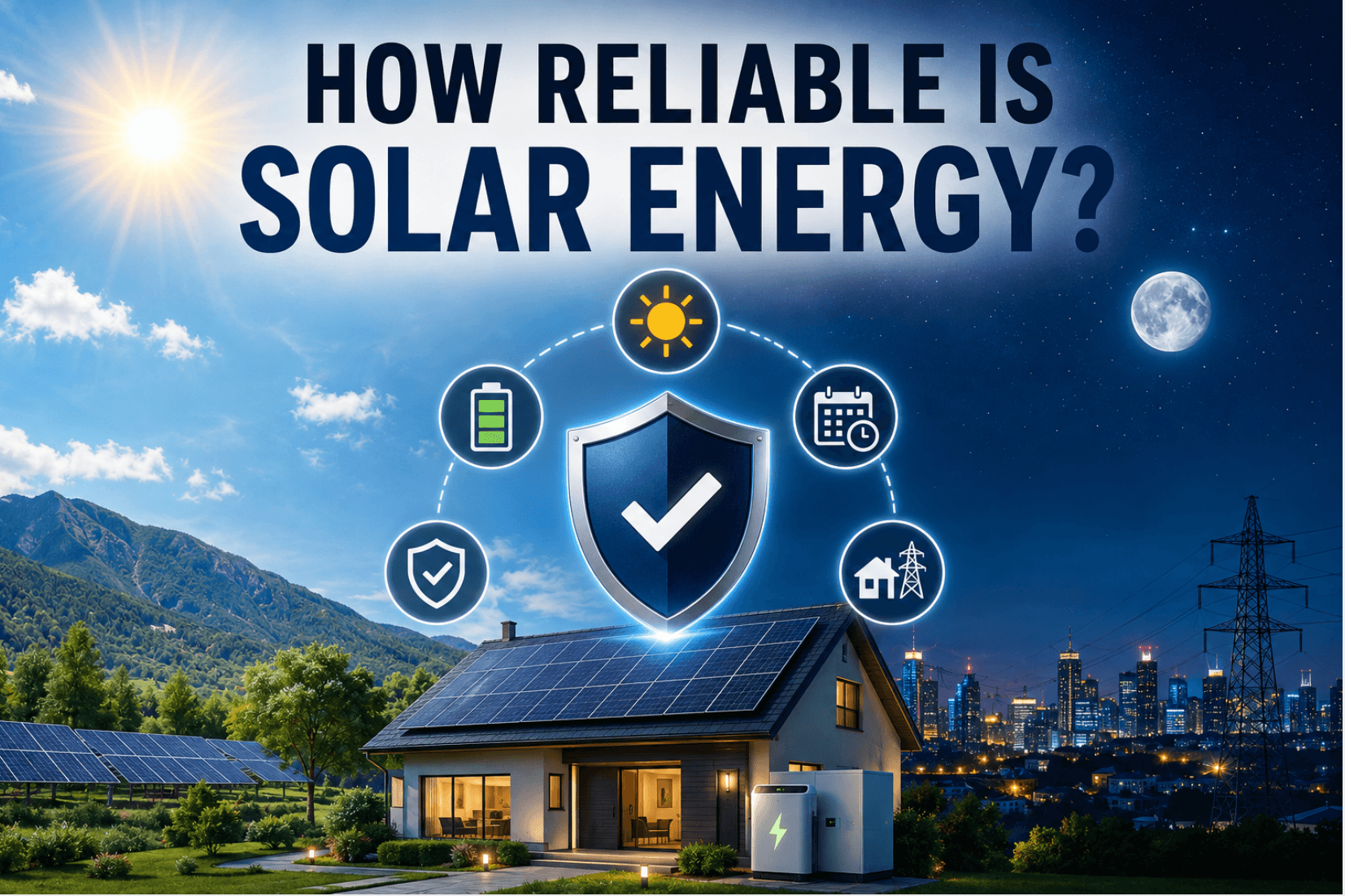
If you’re weighing whether to put thousands of dollars into a solar system, “How reliable is solar energy?” is exactly the right question to ask first.
The short answer: modern solar energy is highly reliable, often more so than the grid it replaces, but its reliability depends on how the system is designed, not just on the panels themselves.
I’m Seki Hudson, an ANCE-certified solar technician, and I’ve designed and inspected systems across very different climates.
In this article, I’ll give you the honest, ground-level view: what’s genuinely dependable about solar, where it has real limitations, and how to engineer around them.
How Reliable Is Solar Energy?
Solar panels themselves are one of the most reliable pieces of hardware you can install. They have no moving parts, degrade slowly and predictably, and routinely carry 25-year performance warranties.
The variability in “how reliable is solar energy” comes almost entirely from three things: sunlight availability, the supporting equipment (inverters and batteries), and the quality of the installation.
Get those three right, and a solar system can deliver power for decades with minimal intervention.
Why Solar Panels Are Inherently Dependable
The photovoltaic panel is the most rugged part of any solar system. Because it converts sunlight to electricity through a solid-state process with no spinning parts, there’s very little that can wear out or break under normal use.
Panels are also built for abuse. Quality modules are certified to withstand hail impacts, high wind loads, snow weight, and decades of UV exposure.
This is why manufacturers are comfortable offering 25- to 30-year warranties, an unusually long guarantee for any consumer product.
Degradation is slow and measurable. A typical panel loses roughly 0.5% of its output per year. After 25 years, a quality panel still produces around 85–88% of its original capacity. That predictability is exactly what “reliability” means in engineering terms: you can forecast performance years in advance.
Where Reliability Actually Gets Tested
If panels are so dependable, why does solar sometimes get a reputation for being unreliable? Three factors do the real work.
Sunlight Is Variable, But Predictable
Solar output drops on cloudy days, in winter, and obviously at night. This is the limitation people worry about most. But it’s important to separate variability from unreliability.
Variability is predictable; we have decades of solar irradiance data for almost every location on Earth, which lets us size systems for the worst months, not the best.
Cloudy days don’t mean zero production either; panels still generate roughly 10–25% of their rated output under heavy cloud cover, since they respond to diffuse light, not just direct sun.
Inverters Are the Weak Link
If something fails in a solar system, it’s usually the inverter, not the panels. Inverters do the hard electrical work of converting DC to usable AC, and they run hot.
String inverters typically last 10–15 years, meaning you’ll likely replace one once over the system’s life. Microinverters and quality hybrid inverters last longer but cost more upfront.
This is the single most important reliability factor most buyers overlook. A cheap inverter undermines an otherwise excellent system.
Installation Quality Matters More Than Brand
In my field experience, more early failures trace back to bad workmanship than to defective hardware, loose connectors, poor grounding, undersized wiring, and water intrusion at roof penetrations. The reliability of solar energy is as much about who installs it as what gets installed.
Solar vs. the Grid: Which Is More Reliable?
Here’s the part that surprises people. In many regions, a properly designed solar-plus-battery system is more reliable than the utility grid.
The grid goes down during storms, heat waves, and equipment failures. A solar system with battery backup keeps your essential loads running through those outages.
Grid-tied systems without batteries are the exception: by safety regulation, they shut off during a blackout to protect line workers. So if outage protection is your goal, the battery, not the panels, is what delivers it.
How to Engineer for Maximum Reliability
If reliability is your priority, design for it from the start.
Add battery storage
Batteries turn intermittent generation into round-the-clock power and provide blackout protection. This is the biggest single upgrade to real-world reliability.
Size for your worst month
A system sized only for summer sun will disappoint in December. Good design accounts for seasonal lows.
Invest in the inverter
Don’t save money on the one component most likely to fail. Quality hybrid inverters or microinverters pay off over the system’s life.
Choose a careful installer
Ask about their grounding practices, connector brands, and roof-penetration sealing methods. These details separate a 25-year system from a 5-year headache.
Keep panels reasonably clean
Dust and debris can shave several percent off output. In most climates, rain handles this, but dry or dusty regions benefit from occasional cleaning.
So, How Reliable Is Solar Energy?
Very, when it’s done right. The panels themselves are arguably the most dependable energy hardware available to consumers, with predictable, decades-long performance.
The real reliability question isn’t about the technology; it’s about system design and installation quality.
Pair good panels with a quality inverter, appropriate battery storage, and a careful install, and solar energy becomes not just reliable but often more reliable than the grid it replaces.
Frequently Asked Questions
How long do solar panels last?
Most quality panels last 25–30 years or more, retaining around 85–88% of their original output at the end of that period.
Does solar work on cloudy days?
Yes. Panels still produce roughly 10–25% of their rated output under heavy clouds because they capture diffuse light, not just direct sunlight.
What part of a solar system fails first?
Usually the inverter. String inverters typically last 10–15 years, so most owners replace one over the system’s lifetime. Panels rarely fail in comparison.
Is solar more reliable than the grid?
With battery backup, often yes, it keeps running during outages. A grid-tied system without batteries will shut off during a blackout for safety reasons.
Do I need batteries for solar to be reliable?
Not for daytime power, but batteries are what provide nighttime supply and blackout protection, making them essential if continuous, outage-proof power is your goal.
Seki Hudson is an ANCE-certified solar energy technician specializing in system design and installation. He writes about practical, field-tested solar topics at SolarFuturista.

1 thought on “How Reliable Is Solar Energy? A Technician’s Honest Answer (2026)”