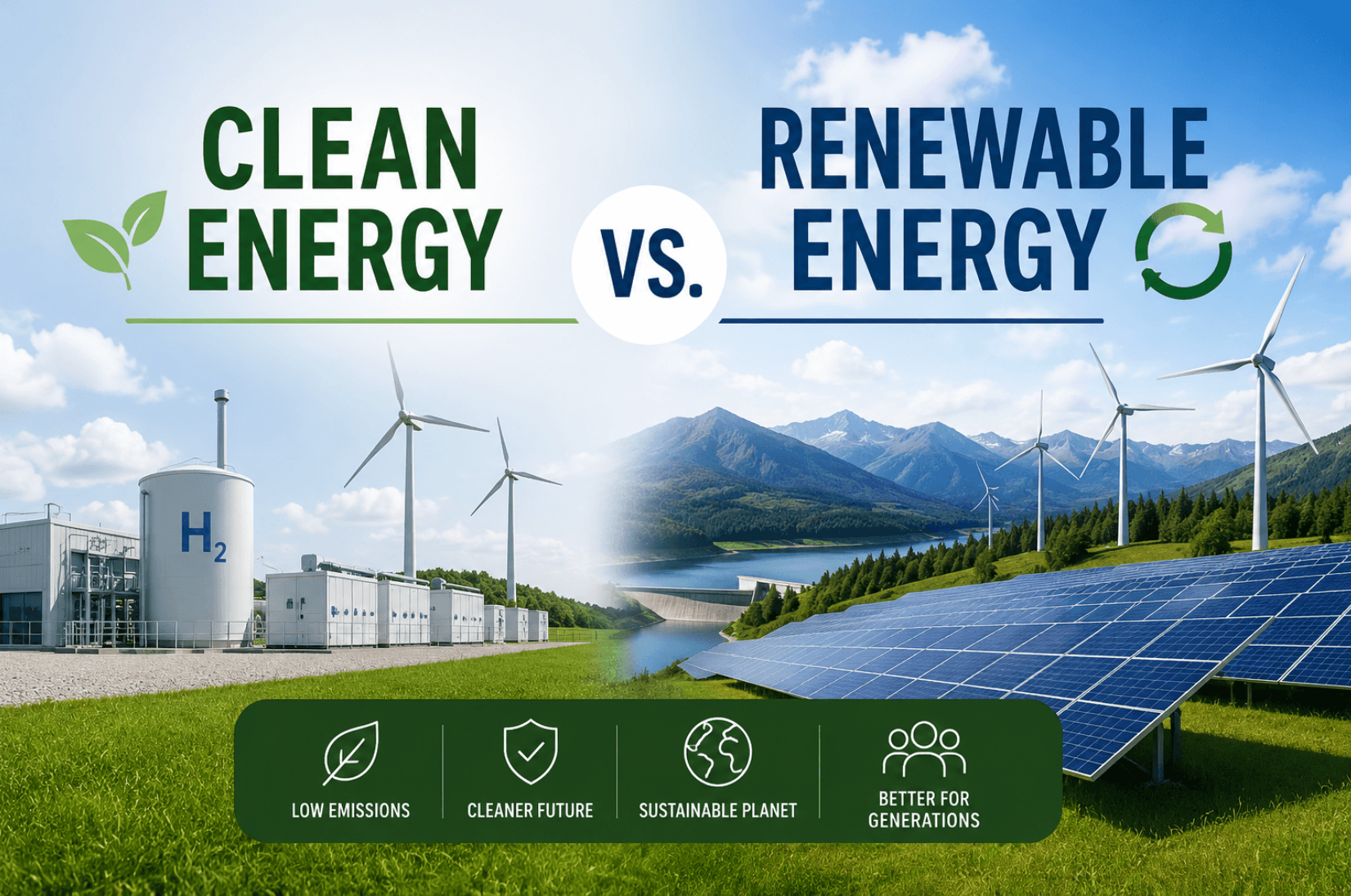
People throw around “clean energy” and “renewable energy” as if they mean the same thing. They don’t.
The two overlap heavily, but they’re answering different questions: one is about emissions, and the other is about whether the source ever runs out.
As an ANCE-certified solar technician, I get asked about this distinction constantly, usually by homeowners trying to make sense of incentive programs, utility marketing, and energy headlines that use the terms loosely.
Getting the difference right actually matters when you’re evaluating which technologies to invest in. So let’s clear it up properly.
Clean Energy vs. Renewable Energy: What’s the Difference?
Renewable energy comes from sources that naturally replenish faster than we use them: sunlight, wind, flowing water, geothermal heat, and biomass. The defining trait is that the source doesn’t deplete.
Clean energy comes from sources that produce little or no greenhouse gas emissions or pollutants when generating power. The defining trait is low emissions.
Most renewable energy is clean, and most clean energy is renewable, which is why the terms get used interchangeably. But each category contains exceptions the other doesn’t, and that’s where the real distinction lies.
What Counts as Renewable Energy
Renewable energy is defined by replenishment. The sun will keep shining, the wind will keep blowing, and rivers will keep flowing on any timescale that matters to human civilization. Burning through them today doesn’t reduce tomorrow’s supply.
The main renewable sources are.
- Solar: photovoltaic panels and solar thermal systems
- Wind: onshore and offshore turbines
- Hydropower: dams and run-of-river systems
- Geothermal: heat drawn from beneath the Earth’s surface
- Biomass: organic material like wood, agricultural waste, and biofuels
Notice biomass on that list. It’s renewable because you can always grow more plants, but burning it releases carbon dioxide and particulates. That single example is why “renewable” and “clean” aren’t synonyms.
What Counts as Clean Energy
Clean energy is defined by its emissions profile during generation. If a source produces electricity without pumping greenhouse gases or harmful pollutants into the air, it qualifies as clean, regardless of whether the underlying fuel is infinite.
Clean sources include all the zero-emission renewables (solar, wind, hydro, and geothermal) plus one big source that surprises people:
- Nuclear power generates large amounts of electricity with virtually zero operational carbon emissions, but its fuel, uranium, is a finite mined resource.
Nuclear is clean but not renewable. Biomass is renewable but not always clean. Those two examples are the cleanest way to understand the entire distinction.
Where the Two Overlap
The overlap is large, and it’s where solar sits comfortably. Solar power is both renewable (sunlight never runs out) and clean (panels generate electricity with no emissions). The same is true of wind and most hydropower and geothermal.
This is why, in everyday conversation, the terms feel interchangeable. The vast majority of the energy transition is built on sources that are both clean and renewable, so people rarely need to separate the two ideas.
Here’s a simple way to see the relationship.
| Source | Renewable? | Clean? |
|---|---|---|
| Solar | Yes | Yes |
| Wind | Yes | Yes |
| Hydropower | Yes | Yes |
| Geothermal | Yes | Yes |
| Nuclear | No | Yes |
| Biomass | Yes | Not always |
| Natural gas | No | No (lower than coal, but still emits) |
| Coal | No | No |
Why the Distinction Actually Matters
This isn’t just terminology for its own sake. The difference shows up in real decisions.
Policy and incentives
Some government programs target “renewable” energy specifically, which can exclude nuclear. Others use “clean energy” standards that include it.
If you’re tracking incentives or rebates, knowing which word a program uses tells you what qualifies.
Reading the marketing honestly
Utilities and product companies pick whichever term sounds best. A “clean energy” plan might lean on nuclear; a “renewable” plan won’t. When you understand the words, the marketing stops being able to blur things.
Sustainability goals
If your goal is purely cutting emissions, clean energy is your frame, nuclear included. If your goal is long-term resource sustainability and energy independence, renewables are the sharper target. For most homeowners installing solar, you happily land in both camps at once.
Where Solar Fits In
For anyone weighing residential or commercial solar, here’s the reassuring part: solar checks every box. It’s renewable because sunlight is effectively infinite.
It’s clean because photovoltaic generation produces zero emissions. And it’s one of the few technologies that lets an individual household participate directly in the energy transition rather than waiting on the grid to change.
That dual identity, both clean and renewable, is a big part of why solar has become the default entry point for people who want to lower their bills and their footprint at the same time.
Frequently Asked Questions
Is all renewable energy clean?
No. Most are, but biomass is a clear exception. It’s renewable because you can regrow the fuel, yet burning it releases carbon dioxide and air pollutants, so it isn’t fully clean.
Is nuclear energy clean or renewable?
Nuclear is clean but not renewable. It generates electricity with almost no operational carbon emissions, which makes it clean, but it relies on mined uranium, a finite resource, so it isn’t renewable.
Is solar both clean and renewable?
Yes. Solar is one of the clearest examples of fully clean energy (no emissions during generation) and fully renewable (sunlight is inexhaustible).
Why are the terms used interchangeably?
Because most of the energy transition relies on sources like solar and wind that are simultaneously clean and renewable. The overlap is so large that the distinction rarely comes up in casual conversation.
Which term should I care about as a homeowner?
For most people installing solar, both apply, so the distinction is mostly academic. It matters most when you’re reading incentive programs or utility plans, where the specific word determines what qualifies.
The Bottom Line
Renewable energy is about a source that never runs out. Clean energy is about a source that doesn’t pollute. They overlap enormously, but nuclear (clean, not renewable) and biomass (renewable, not always clean) mark the edges where they diverge.
Solar sits in the sweet spot of both, which is exactly why it’s such a practical starting point for cutting emissions and building long-term energy independence at the same time.
If you’re deciding where to put your money in the energy transition, a technology that satisfies both definitions is hard to beat.
Seki Hudson is an ANCE-certified solar energy technician specializing in residential and commercial photovoltaic system design and installation.
