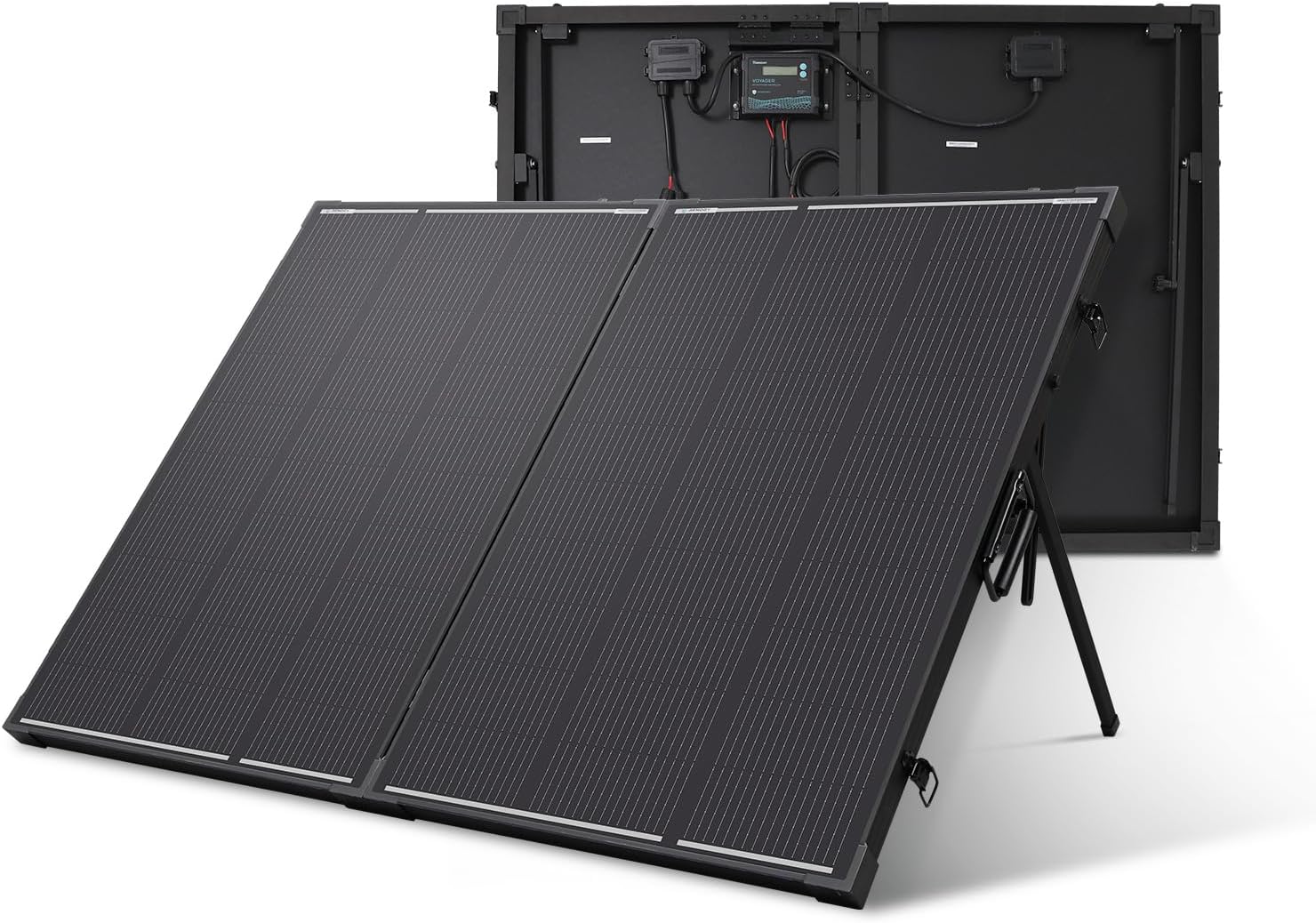
Cheap solar panels are tempting, but “cheap” can mean two very different things. It can mean an affordable, fairly priced panel that gives you real value, or it can mean a low-grade panel that underperforms and dies years before its warranty suggests. The goal of this guide is to help you spend less without buying junk.
Below, I break down what actually drives solar panel prices, where the genuinely good deals are, and the specific red flags that separate a smart bargain from an expensive mistake.
How much do cheap solar panels cost?
Cheap solar panels typically cost between $0.40 and $0.70 per watt for the panel alone, meaning a 400-watt panel can run roughly $160–$280.
Budget-tier and refurbished panels can drop below $0.40/watt, while premium panels often exceed $1.00/watt. Prices vary by brand, efficiency, and whether you buy individual panels or a full kit.
That per-watt number is the single most useful metric for comparing deals. A lower sticker price on a smaller panel is not always cheaper; always divide the price by the wattage.
Typical price ranges by tier
| Tier | Price per watt | Best for |
| Budget / refurbished | $0.25 – $0.45 | Sheds, RVs, off-grid experiments |
| Mid-range mono | $0.45 – $0.75 | Most home & cabin installs |
| Premium | $0.90 – $1.40 | Tight roofs, max efficiency |
Prices are approximate and fluctuate with supply, tariffs, and season. Always verify current pricing before buying.
What makes a solar panel cheap?
Not all low prices are created equal. Understanding why a panel is cheap tells you whether it’s a bargain or a liability.
Legitimate reasons a panel is affordable
- Polycrystalline cells are slightly less efficient than monocrystalline but cheaper per panel and perfectly fine when you have space.
- Bulk and pallet pricing: buying 10+ panels at once drops the per-unit cost significantly.
- B-grade or cosmetic-blemish panels, minor visual flaws, full electrical performance, often 20–30% off.
- Last-generation models and last year’s stock were cleared out at a discount as new lines launched.
- Overstock and clearance: distributors offloading inventory to free up warehouse space.
Warning signs: the panel is cheap for the wrong reasons
- No brand name or a brand with zero track record or reviews.
- Vague or missing specifications (no datasheet, no efficiency rating, no temperature coefficient).
- No certifications such as IEC 61215, IEC 61730, or UL listing.
- A warranty that is suspiciously short, or from a company unlikely to exist in 10 years.
- Prices far below market with no explanation — if it’s 70% cheaper than everything else, ask why.
Where to find genuinely cheap solar panels
Online marketplaces
Large online retailers carry budget panels and full kits with verified reviews, return windows, and buyer protection, a big advantage over unknown sellers.
Top budget panel recommendations here
Solar distributors and wholesalers
Distributors that sell to installers often allow public bulk purchases. Per-watt prices are excellent, but you’ll buy by the pallet and arrange your own shipping.
Refurbished and used panels
Decommissioned commercial panels can sell for a fraction of new ones. They may have lost some output, but for off-grid or hobby projects, the value can be outstanding. Always ask for a recent output test.
Local installer overstock
Installers frequently have leftover panels from completed jobs and will sell them cheaply rather than store them. Worth a phone call.
Are cheap solar panel kits worth it?
For beginners, a kit is often the smartest, cheap option. A good budget kit bundles the panel, charge controller, cables, and mounting hardware components that are already matched, so you avoid buying the wrong controller or connectors separately.
Kits shine for RVs, vans, sheds, and small off-grid setups. For a full home system, individual components usually give better value and flexibility, but a kit removes the guesswork while you learn.
Get recommended budget solar kit here
How to evaluate a cheap solar panel before buying
Run any budget panel through this quick checklist.
- Check the per-watt price, not the sticker price.
- Confirm the panel type (monocrystalline vs. polycrystalline) and efficiency rating.
- Look for IEC and/or UL certifications on the datasheet.
- Read the warranty, both the product warranty and the power-output warranty.
- Research the brand: how long has it existed, and are there real reviews?
- Factor in shipping; heavy panels can carry surprising freight costs that erase the savings.
Common mistakes when buying cheap solar panels
- Buying on price alone and ignoring efficiency, you may need more panels and more roof space, costing more overall.
- Forgetting balance-of-system costs, the panel is often less than half the total. The inverter, wiring, and mounting add up.
- Mismatching the charge controller to the panel voltage.
- Overlooking shipping and import fees on “too good to be true” overseas deals.
- Skipping the warranty fine print and assuming all warranties are equal.
Frequently asked questions
Are cheap solar panels any good?
Many are. An affordable panel from a reputable brand with proper certifications can perform nearly as well as a premium one.
It may just be slightly larger or less efficient. The danger is uncertified, no-name panels, not low prices themselves.
What is the cheapest type of solar panel?
Polycrystalline panels are usually the cheapest new option, while refurbished or used monocrystalline panels can be cheaper still on a per-watt basis if you can verify their condition.
How many cheap solar panels do I need?
It depends on your energy use, but a useful rule of thumb is to add up the daily watt-hours you want to cover and divide by the realistic daily output per panel (roughly the panel’s wattage × 4–5 sun hours). Sizing tools and a load calculation will get you an exact number.
Do cheap solar panels have warranties?
Reputable budget brands offer a 10–12-year product warranty and a 25-year output warranty. Unbranded panels often have little or no meaningful warranty, which is exactly why they’re cheap.
Final thoughts: cheap doesn’t have to mean low quality
The smartest way to buy cheap solar panels is to chase value, not just the lowest number. Compare per-watt pricing, insist on certifications and a real warranty, and buy from sellers with a track record and a return policy.
Do that, and you can cut your solar costs substantially without ending up with panels that quit on you in five years.
Ready to size your system? Check out our related guides on choosing the right solar kit and calculating how many panels you need.
