If you’re shopping for a solar system, you’ve probably asked the question that trips up most homeowners: who makes the best solar inverters? It’s a fair question, because the inverter is arguably the most important component in your entire setup.
Your panels quietly soak up sunlight for decades. Still, the inverter is the hardworking brain that converts that raw DC power into the AC electricity your home actually uses, and it does that job every second the sun is up.
Here’s the honest answer up front: there is no single “best” solar inverter for everyone. The right choice depends on your roof, your budget, whether you want battery storage, and how much shade you’re dealing with.
That said, a handful of manufacturers consistently rise to the top in 2026. Below, we break down who they are, what they do best, and how to pick the one that fits your project.
What a Solar Inverter Actually Does
Before comparing brands, it helps to understand why this device matters so much. Solar panels generate direct current (DC), but your appliances and the grid run on alternating current (AC).
The inverter converts DC to AC and, in doing so, determines your system’s efficiency, monitoring capabilities, and long-term reliability.
Modern inverters go far beyond simple conversion, adding real-time monitoring, fault detection, battery integration, and grid synchronization.
There are three main types worth knowing
String inverters connect multiple panels in series to a single central unit. They’re cost-effective and easy to maintain, but if one panel underperforms due to shade, the whole string can drop in output. They shine on simple, sunny roofs and ground mounts.
Microinverters put a tiny inverter on each panel. Every panel operates independently, so shade on one doesn’t drag down the rest. They’re ideal for complex or shaded roofs at a higher per-panel cost.
Hybrid inverters are built to manage both solar and battery power on a single system, making them the go-to choice if energy storage is part of your plan now or later.
Who Makes the Best Solar Inverters in 2026?
Enphase: Best for Most Residential Roofs
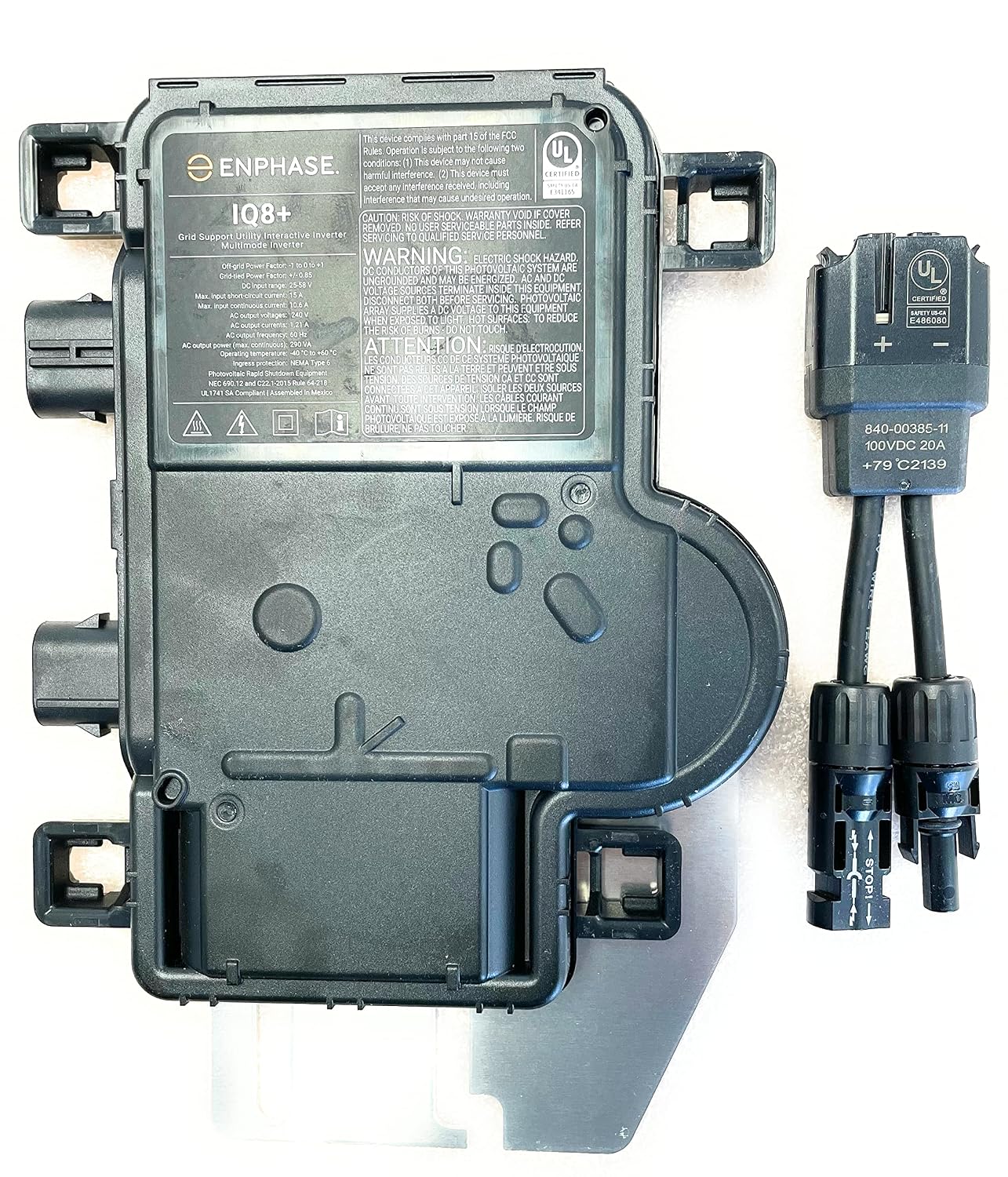
Enphase is the most popular inverter brand among homeowners, and for good reason. Its IQ8 microinverters offer panel-level conversion and monitoring, which makes them especially effective on roofs with shading or awkward layouts.
Because each panel runs independently, there’s no single point of failure: if one microinverter goes down, only that panel stops producing while the rest keep working.
The standout feature is the warranty. Enphase includes a 25-year standard warranty on its microinverters, the longest baseline coverage in the industry.
Its IQ8 microinverters run around 97.5% CEC efficiency, which is slightly lower than the best string inverters, but per-panel optimization often recovers more than enough production to close that gap on any roof with shade.
Enphase is also the more flexible choice if you want to add a battery later, since its AC-coupled IQ Battery can be added to an existing system without replacing the inverter.
The tradeoff is price. Expect to pay somewhere in the range of $800 to $2,500 more than a comparable SolarEdge install on a typical 8 kW system.
Enphase’s monitoring app is widely considered the best in the business, with a clean, intuitive interface.
SolarEdge: Best for Complex Roofs and Peak Efficiency
SolarEdge takes a middle-ground approach: a central string inverter paired with individual DC power optimizers behind each panel.
That gives you panel-level monitoring and optimization without going full microinverter, and it comes with the highest efficiency in its class.
The SolarEdge HD-Wave inverters hit roughly 99% peak CEC efficiency, making them the most efficient mainstream option available.
SolarEdge is a strong pick for complex or partially shaded roofs, and its DC-coupled architecture has a slight edge for battery storage efficiency when you install solar and storage together from day one.
The main drawbacks are cost and warranty structure. The standard inverter warranty is 12 years (extendable to 20 or 25 years for an added cost), while the optimizers carry a separate 25-year warranty that runs on its own claim process. Systems tend to be a bit pricier than basic string setups.
Sungrow: Best Value Hybrid
If you want strong hybrid performance without the premium price, Sungrow is one of the most compelling brands in 2026.
It’s one of the largest inverter manufacturers in the world, and its SH-series hybrid inverters deliver around 98.4% CEC efficiency across a 5 kW to 15 kW range, at roughly 30% below the Enphase equivalent at US distributor cost.
Recent firmware added forecast-based smart charging, closing much of the feature gap with premium brands.
Sungrow’s standard warranty is 10 years on parts and workmanship, extendable to 25 years for a small premium.
For homeowners building a solar-plus-storage system on a budget, or anyone wanting a complete integrated direction rather than a basic grid-tied unit, Sungrow is hard to beat on value.
Huawei: Best Integrated Smart Ecosystem
Huawei is a global heavyweight in solar inverters, commanding a significant share of the string inverter market. Its SUN2000 series paired with the LUNA2000 storage system creates a fully integrated smart PV ecosystem where the inverter, battery, monitoring platform, and safety functions all work together.
That’s a genuine advantage if you want everything managed through one clean digital platform.
The main caveat is that you get the most value by staying inside the Huawei ecosystem; mixing in third-party batteries or components requires careful compatibility checking.
SMA and Fronius: Trusted Names for Specific Setups
SMA remains a respected choice for three-phase ground-mounted systems and larger installations, backed by decades of engineering credibility.
Fronius is another established European brand known for reliable string inverters, with warranties starting at 10 years and extendable up to 20.
Neither dominates the residential rooftop conversation the way Enphase and SolarEdge do, but both are solid, proven options for the right project.
Sol-Ark: Best for Off-Grid and Heavy Storage
For homeowners focused on energy storage, backup power, or off-grid living, Sol-Ark has built a strong reputation around its powerful all-in-one hybrid inverters.
These units combine solar generation, battery storage, and backup power in a single flexible package with high power capacity, making them popular for resilient hybrid and off-grid systems.
How to Choose the Right Inverter for You
The best solar inverter should not be judged on efficiency, price, or brand reputation alone. The more useful question is whether it can solve the actual problem of your specific project. Keep these factors front and center:
Your roof
Simple, unshaded roofs and ground mounts do fine with string inverters. Complex, multi-plane, or shaded roofs benefit from microinverters or optimized string inverters.
Battery plans
If storage is a goal now or later, lean toward a hybrid inverter or a system that makes adding a battery easy. Around 40% of homeowners now want storage from the start.
Warranty and manufacturer stability
Longer coverage protects your investment, but it only matters if the company is around to honor it. Prioritize financially stable manufacturers with strong support.
Monitoring quality
A good app makes it far easier to spot problems and track savings over 25 years of ownership.
Total cost, not just upfront price
A cheaper inverter that underperforms or fails early can cost far more over the life of the system than a pricier, more reliable unit.
The Bottom Line
So, who makes the best solar inverters? For most homeowners in 2026, Enphase is the safest all-around bet thanks to its 25-year warranty, per-panel resilience, and battery flexibility.
SolarEdge is the top pick for complex roofs and anyone chasing maximum efficiency. Sungrow and Huawei offer outstanding value and integrated storage, while SMA, Fronius, and Sol-Ark serve specialized ground-mount, off-grid, and large-scale needs.
The real “best” inverter is the one matched to your roof, your storage goals, and your budget. Figure out those three things first, and the right brand will make itself obvious.
When you’re ready to buy, get quotes that specify the exact inverter model, compare the warranties line by line, and don’t let a small upfront saving talk you out of the reliability that keeps your system producing for decades.
