If you’ve started researching solar power for your home, you’ve probably noticed that everyone talks about solar panels, but far fewer people explain the device that actually makes those panels useful.
That device is the solar inverter, and it’s arguably the most important component in your entire system.
In this guide, we’ll break down exactly what a solar inverter is, how it works, the different types you can choose from, and what to look for when buying one.
What Is a Solar Inverter?
A solar inverter is an electronic device that converts the direct current (DC) electricity generated by your solar panels into alternating current (AC) electricity, the type of power your home appliances, lights, and the electrical grid actually use.
Solar panels can only produce DC electricity. But almost everything in your home, your refrigerator, TV, air conditioner, and lights, runs on AC.
Without an inverter, the energy your panels capture would be unusable. That’s why the inverter is often called the “brain” of a solar system.
How Does a Solar Inverter Work?
The process is straightforward once you understand the basics:
Solar panels capture sunlight and convert it into DC electricity through the photovoltaic effect.
DC electricity flows to the inverter, either from each panel individually or from the whole array combined.
The inverter converts DC to AC using high-speed electronic switching that mimics the smooth alternating waveform of grid power.
AC electricity powers your home, and any excess can be sent back to the grid or stored in a battery.
Beyond conversion, a modern inverter also handles several critical jobs: maximizing energy harvest through Maximum Power Point Tracking (MPPT), monitoring system performance, and shutting down safely during a grid outage to protect utility workers, a feature known as anti-islanding.
Why Is the Inverter So Important?
The inverter directly affects three things every solar owner cares about.
Efficiency
A high-quality inverter wastes less energy during conversion, meaning more of your sunlight becomes usable power.
Reliability
Inverters are the component most likely to need replacement during a system’s lifetime, so build quality matters.
Monitoring
Most modern inverters let you track production in real time through an app, so you know your system is working as expected.
Types of Solar Inverters
There are four main types of solar inverters, each suited to different situations.
String Inverters
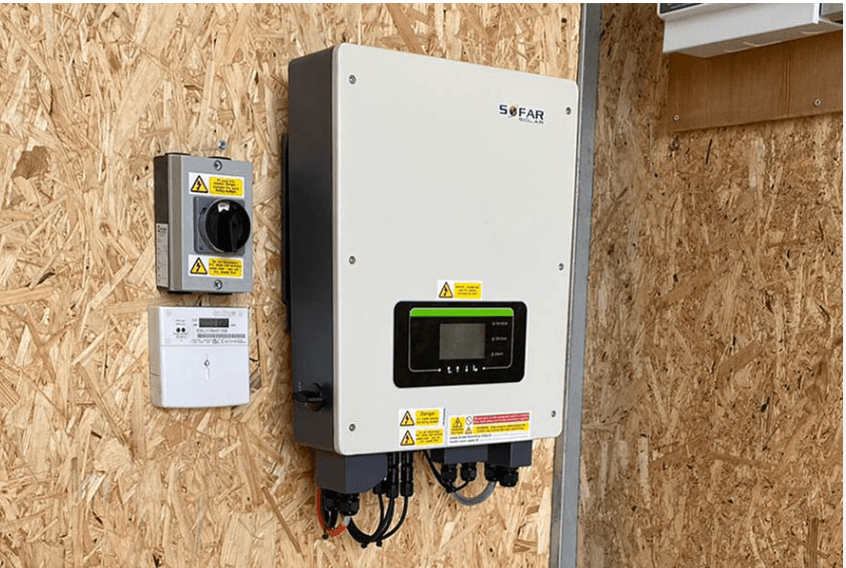
String inverters are the most common and most affordable option. Your panels are wired together in a “string,” and the combined DC output flows to a single inverter, usually mounted on a wall near your electrical panel.
Best for: Homes with unshaded roofs and a simple, single-direction roof layout.
Drawback: If one panel is shaded or underperforming, it can drag down the output of the entire string.
Microinverters
Microinverters are small units installed underneath each panel. Each panel converts its own DC to AC right at the source.
Best for: Roofs with shading, multiple orientations, or complex layouts.
Drawback: Higher upfront cost, though performance and panel-level monitoring are excellent.
Power Optimizers (Hybrid Approach)
Power optimizers are installed at each panel, like microinverters, but they only condition the DC electricity. A central string inverter still handles the actual conversion. This blends panel-level optimization with lower cost.
Best for: Homeowners who want better shade performance without paying full microinverter prices.
Hybrid Inverters
Hybrid inverters can manage both your solar panels and a battery storage system in a single unit. They decide when to use solar power directly, when to charge the battery, and when to draw from the grid.
Best for: Anyone planning to add battery backup now or in the future.
String Inverter vs. Microinverter: Quick Comparison
| Feature | String Inverter | Microinverter |
|---|---|---|
| Upfront cost | Lower | Higher |
| Shade performance | Poor | Excellent |
| Panel-level monitoring | No | Yes |
| Best roof type | Simple, unshaded | Complex or shaded |
| Typical lifespan | 10–15 years | 20–25 years |
How to Choose the Right Solar Inverter
When selecting an inverter, weigh these factors
System size
The inverter must be rated to handle your panel array’s total output.
Roof conditions
Shading and multiple roof angles favor microinverters or optimizers.
Battery plans
If storage is on your roadmap, a hybrid inverter saves you money later.
Efficiency rating
Look for an efficiency of 96% or higher.
Warranty
Quality string inverters carry between 10 and 12 years warranties; microinverters often reach 20–25 years.
How Long Do Solar Inverters Last?
A typical string inverter lasts 10 to 15 years, while microinverters and power optimizers often last 20 to 25 years, roughly matching the lifespan of the panels themselves.
Because string inverters usually need at least one replacement over a system’s life, factor that cost into your long-term planning.
Frequently Asked Questions
Can a solar system work without an inverter?
No. Without an inverter, the DC electricity from your panels can’t power standard home appliances or feed into the grid.
Where is a solar inverter installed?
String and hybrid inverters are typically mounted on a wall near your main electrical panel, often in a garage or utility area. Microinverters and optimizers are installed on the roof beneath each panel.
Do solar inverters need maintenance?
They’re largely maintenance-free, but they should be kept cool, dry, and free of dust. Monitoring apps will alert you to any performance issues.
Final Thoughts
The solar inverter is the unsung hero of every solar power system, quietly turning raw sunlight into the electricity that runs your home.
Choosing the right type for your roof, budget, and future battery plans can make a real difference in how much value you get from your investment.
If you’re ready to go deeper, check out our guides on choosing the right inverter size and solar inverter maintenance to keep your system running at peak performance for years to come.
