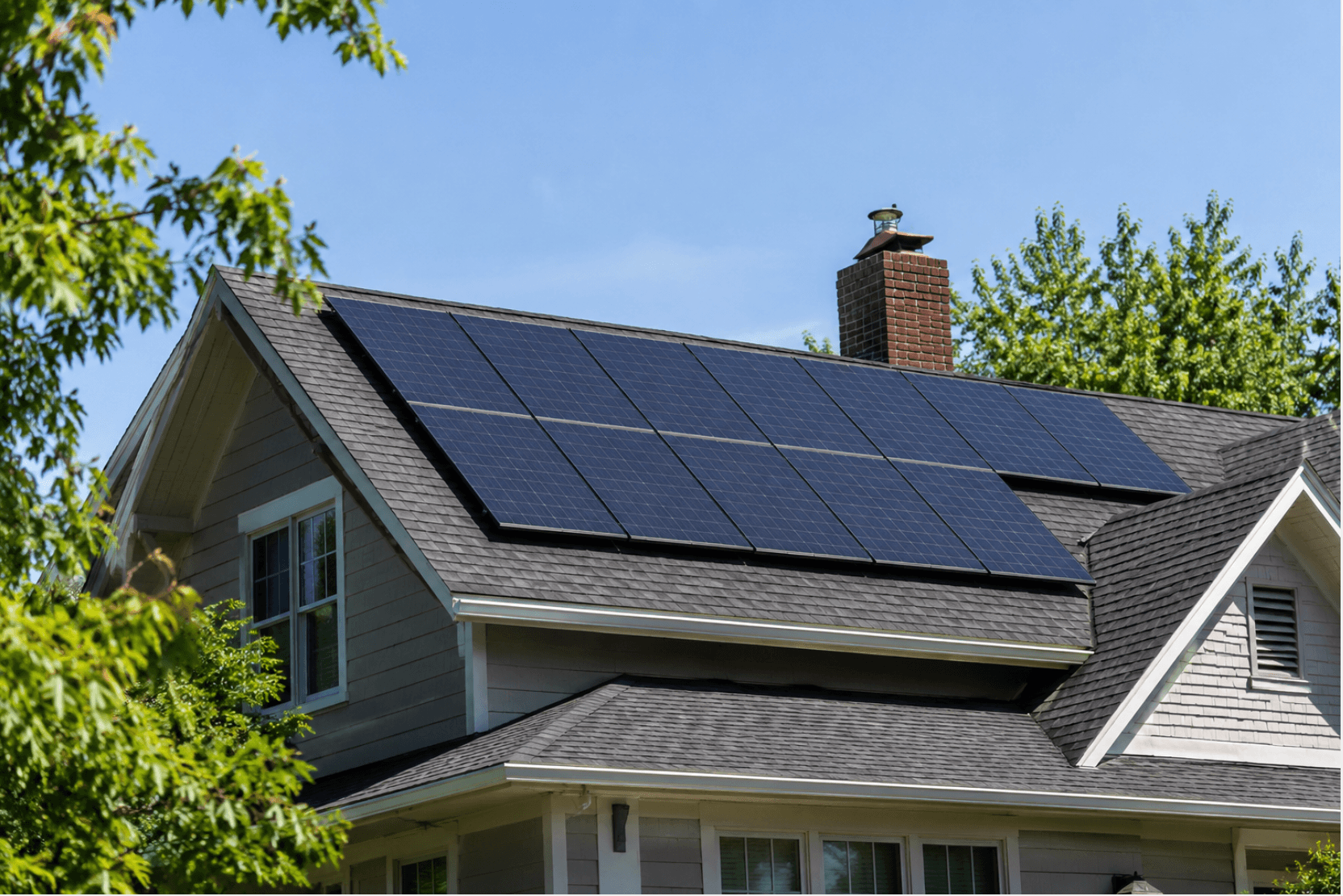
Before you let a single salesperson onto your driveway, you deserve a straight answer to one question: Is my house good for solar?
The honest truth is that not every home is a great candidate, and the companies eager to sell you a system rarely lead with that.
As a solar systems designer who has assessed hundreds of rooftops, I’ll walk you through exactly how to evaluate your own home so you can commit with confidence instead of regret.
By the end of this guide, you’ll be able to score your house on the seven factors that actually matter, spot the deal-breakers, and know which questions to ask before you sign anything.
Is My House Good for Solar?
Most houses are good for solar, but the degree matters. A south-facing, unshaded roof with 15–25 years of life left and decent electricity bills is close to ideal.
A heavily shaded, north-facing roof on a home that needs re-roofing next year is a much weaker case.
The goal isn’t a yes-or-no verdict; it’s understanding how well solar will perform on your specific home and whether the economics work for you.
Let’s break down the factors that determine where your house lands on that spectrum.
Roof Direction (Orientation)
Direction is the single biggest driver of how much energy your panels will produce.
- In the Northern Hemisphere (the U.S., most of Mexico, and Europe), a south-facing roof captures the most sunlight across the day.
- East- and west-facing roofs still work well, typically producing 10–20% less than a comparable south-facing array. West-facing can even be preferable if your utility charges more for late-afternoon electricity.
- North-facing roofs are the weakest in the Northern Hemisphere and may not justify the investment on their own.
If your roof has multiple faces, an installer can spread panels across the best-performing sections. Don’t write off your home just because one slope points the wrong way.
Shade Throughout the Day
Shade is the silent killer of solar production. Even partial shading on a few panels can drag down the output of an entire string.
Walk your property and look.
- Tall trees to the south, east, and west
- Neighboring buildings or chimneys
- Vent pipes, satellite dishes, or rooftop equipment
The key is to observe shade at different times of day and seasons, since the sun sits lower in winter.
A roof that’s clear at noon in July might be shaded by a neighbor’s oak at 4 p.m. in December. Modern solutions like microinverters and power optimizers reduce the penalty from partial shade, but nothing beats unobstructed sun.
Roof Age and Condition
This is the factor homeowners most often overlook and the one that causes the most expensive regret.
Solar panels last 25–30 years. If your roof has only 5–10 years of life left, you’ll eventually pay to remove the panels, replace the roof, and reinstall them, often costing $1,000–$5,000 in extra labor.
My rule of thumb
If your roof is more than 15 years old or shows signs of wear, get it inspected (or replaced) before installing solar. It’s far cheaper to do both at once than to redo the work later.
Roof Size and Layout
You need enough usable space to fit a system that meaningfully offsets your bill. A typical residential system needs roughly 300–600 square feet of clear roof area.
Complications that reduce usable space include:
- Multiple dormers and steep angles
- Skylights and chimneys break up the surface
- Very small or oddly shaped roof planes
A simple, large, rectangular roof is ideal. A chopped-up roof can still work, but expect a smaller system and slightly higher per-panel costs.
Your Electricity Bill
Solar makes the most financial sense when you’re paying a lot for power. The higher your bill, the faster your payback.
Pull your last 12 months of statements and find your average monthly kilowatt-hour (kWh) usage and your cost per kWh.
If you’re paying premium rates or you’re on a tiered tariff where heavy usage gets expensive, solar’s savings stack up quickly. If your bill is already tiny, the payback period stretches out, and the case gets weaker.
Local Sunlight (Your Climate)
You don’t need a desert to benefit from solar. Cloudy regions like Germany have thrived on rooftop solar for years. That said, more annual sun hours mean more production from the same system.
Tools like PVWatts (from the U.S. National Renewable Energy Laboratory) let you plug in your address and estimate how much energy a system would generate in your exact location, a great reality check before any sales call.
Local Incentives, Net Metering, and Policy
The economics of solar depend heavily on what your utility and government allow.
- Net metering (or net billing) determines how much credit you get for excess power you send to the grid. Generous net metering dramatically improves your return.
- Tax credits and rebates can cut thousands off your upfront cost, but these change. Notably, the U.S. federal residential solar tax credit is set to expire, so timing matters more than ever for American homeowners.
- Local permitting and interconnection rules vary widely by region.
Check what applies in your area before you commit, because two identical houses in different jurisdictions can have very different payback math.
A Simple Self-Assessment Scorecard
Rate your home on each factor. The more “good” answers, the stronger your candidacy.
| Factor | Good Sign | Weak Sign |
|---|---|---|
| Roof direction | South/east/west | North-facing only |
| Shade | Clear most of the day | Heavy tree or building shade |
| Roof age | Under 15 years | Over 15 years or worn |
| Roof space | 300+ sq ft clear | Small or chopped-up roof |
| Electricity bill | High monthly cost | Very low usage |
| Sunlight | Average to high | Persistently overcast + low rates |
| Incentives | Net metering + rebates | No net metering, no incentives |
5–7 good signs: Your house is a strong solar candidate; get quotes.
3–4 good signs: Solar may work; run the numbers carefully.
0–2 good signs: Proceed cautiously and prioritize a professional assessment.
What to Do Before You Commit
- Run a free online estimate using PVWatts or Google’s Project Sunroof to ground-truth the sales pitch.
- Get your roof inspected if it’s aging; do this before installation.
- Gather 12 months of electricity bills so you can calculate real savings, not projections.
- Get at least three quotes and compare equipment, warranties, and total cost—not just the monthly payment.
- Verify local net metering and incentive rules independently rather than trusting the installer’s word.
Taking these five steps turns “Is my house good for solar?” from a guess into a data-backed decision.
Frequently Asked Questions
Can I get solar if my roof faces north?
You can, but a north-facing roof in the Northern Hemisphere produces the least energy. If you have other roof faces (east, west, or south), an installer will usually prioritize those. A standalone north-facing system rarely delivers strong returns.
Does my house need a new roof before solar?
Not always, but if your roof has fewer than 10–15 years of life left, replace it first. Removing and reinstalling panels later costs far more than doing both projects at once.
Will solar work if my area is often cloudy?
Yes. Solar panels still generate power on overcast days, just less than on sunny ones. Cloudy countries like Germany are among the world’s solar leaders. Your local electricity rates and incentives often matter more than cloud cover.
How much roof space do I need for solar panels?
A typical home system needs roughly 300–600 square feet of unshaded, usable roof. Smaller or heavily obstructed roofs can still host a system, just a smaller one.
How do I know if solar is worth it for my home?
Compare your annual electricity cost against the system’s estimated lifetime savings, factoring in incentives and net metering. If the payback period is comfortably shorter than the panels’ 25–30-year lifespan, it’s likely worth it.
The Bottom Line
So, is your house good for solar? For most homeowners, the answer is a qualified yes, but the difference between a great investment and a disappointing one comes down to the details: your roof’s direction and condition, shade, your electricity costs, and your local policy.
Score your home honestly on the seven factors above, run a free online estimate, and gather real quotes before you sign anything.
Do that homework, and you won’t just know whether your house is good for solar; you’ll commit with the confidence of someone who checked the math themselves.
Seki Hudson is an ANCE-certified solar energy system designer with hands-on experience assessing residential and commercial installations. This article is educational and not a substitute for a professional on-site evaluation.
