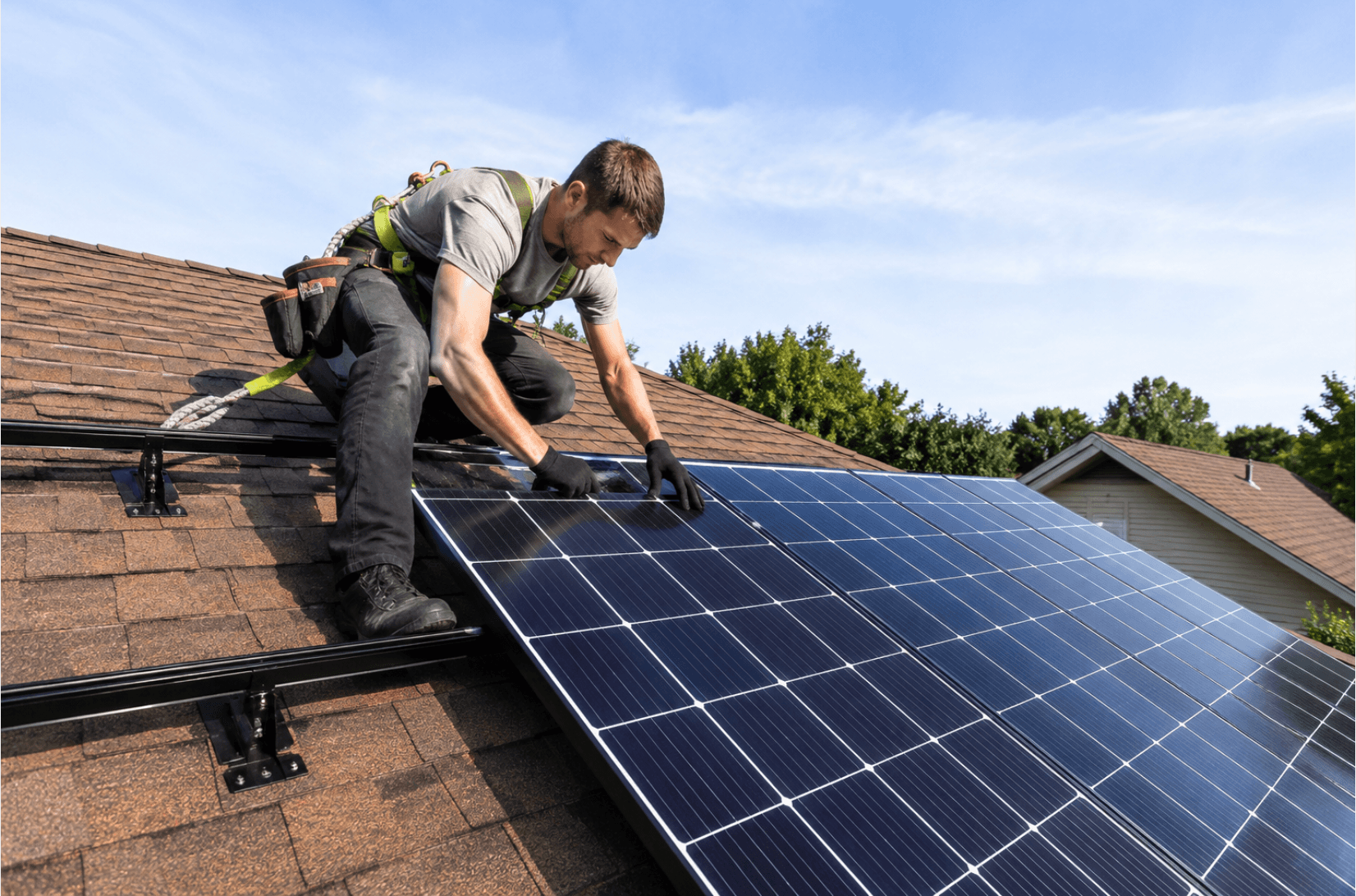
Short answer: Yes, you can install solar panels yourself, but how far you can legally go depends on your system type, your local codes, and whether you’re connecting to the grid.
Off-grid and small portable systems are very DIY-friendly. Grid-tied systems that feed power back to your utility almost always require a licensed electrician’s sign-off and a permit, even if you do most of the physical work yourself.
This guide walks through what you can realistically do on your own, where the law draws the line, what it actually costs, and how to decide whether DIY makes sense for your situation.
The Quick Verdict
| System Type | DIY-Friendly? | What You’ll Likely Need a Pro For |
|---|---|---|
| Portable/RV/camping | Yes, fully | Nothing in most cases |
| Off-grid cabin or shed | Mostly yes | High-voltage wiring, large battery banks |
| Grid-tied (rooftop) | Partially | Permit, electrical connection, utility interconnection, inspection |
| Grid-tied with battery backup | Rarely fully DIY | Most of the electrical and code-compliance work |
If your goal is to charge a battery, run lights, or power a few appliances away from the grid, you can almost certainly do it yourself.
If your goal is to cut your utility bill with a roof-mounted, grid-connected array, expect to involve a licensed professional for at least part of the job.
What You Can Legally Do Yourself
In most places, you are allowed to do the physical labor of mounting panels and running low-voltage DC wiring. Homeowners frequently.
- Assemble and place ground mounts or roof racking
- Mount the panels themselves
- Run DC wiring from panels to a charge controller or inverter
- Wire up off-grid battery banks (within voltage limits)
- Set up portable and plug-in systems
The line is drawn at the point where your system connects to the grid or your home’s main electrical panel.
That connection involves AC wiring, your service panel, and your utility’s equipment, and that’s where licensing, permits, and inspections come in.
Where DIY Stops: Permits, Codes, and the Grid
This is the part most “just install it yourself” videos skip over.
Permits
Almost every jurisdiction requires a building permit and an electrical permit for a permanent solar installation.
Inspectors will check structural mounting, wiring, grounding, and code compliance. Skipping permits can void your home insurance, create problems when you sell, and force you to tear out the system.
Electrical code
Solar systems must comply with the National Electrical Code (or your country’s equivalent). This covers conductor sizing, overcurrent protection, rapid shutdown requirements, grounding, and labeling. Getting this wrong is a fire and electrocution risk, not just a paperwork problem.
Utility interconnection
If you want to send excess power back to the grid (net metering), your utility must approve the interconnection.
They generally require that a licensed electrician perform or certify the grid-side work, and they’ll inspect before allowing you to switch on.
Inspections
Both your local building authority and your utility will inspect a grid-tied system before it goes live.
A practical middle path many people take: do the mounting and panel work yourself, then hire a licensed electrician for the final connection, permit sign-off, and interconnection. This can still cut your total cost significantly while keeping everything legal and safe.
The Real Costs: DIY vs. Professional
Labor is a major chunk of a professional install, so DIY can save money, but the savings are smaller than people expect once you account for equipment, permits, and your own time.
What a full professional install typically includes: panels, inverter, racking, wiring, permits, design, labor, and warranty bundled into one price.
What DIY usually saves: the labor markup and design fees.
What DIY still costs you
- Panels, inverter/microinverters, racking, wiring, connectors, conduit
- Permit fees
- An electrician for the grid connection (if grid-tied)
- Specialized tools (or rentals)
- Your time, often a full weekend or more
- The risk of mistakes that cost more to fix than to have done right
DIY also affects financing and incentives. Many solar tax credits and rebates still apply to equipment you buy yourself, but some local rebate programs and many manufacturer warranties require professional installation. Read the fine print before assuming you’ll qualify.
Safety: The Part You Shouldn’t Treat Casually
Solar installation combines three serious hazards
Roof work
Falls are the leading cause of solar-related injuries. Working on a pitched roof without proper fall protection is genuinely dangerous.
Electricity
Solar panels produce power whenever there’s light. You can’t simply “switch them off.” DC arc faults can cause fires, and a large array carries voltages that can injure or kill.
Structural load
Panels and racking add weight and wind load to your roof. An improper mount can cause leaks or, in extreme cases, structural failure.
If you’re not comfortable working at height and you don’t have a solid grasp of electrical wiring, these risks alone are a strong argument for hiring a professional or at least limiting your DIY to ground-mounted or portable systems.
When DIY Makes Sense
DIY solar is a great fit if you
- Want an off-grid, portable, or small system (RV, cabin, shed, tiny home)
- Are comfortable with basic wiring and tools
- Have a ground-mount location that avoids dangerous roof work
- Want to learn the system deeply and maintain it yourself
- Live somewhere with straightforward permitting for off-grid setups
When to Hire a Professional
Lean toward a pro if you
- Want a grid-tied rooftop system with net metering
- Aren’t confident around AC wiring and your main electrical panel
- Have a complex or steep roof
- Want maximum eligibility for warranties, rebates, and financing
- Simply want it done quickly, cleanly, and with a workmanship guarantee
How to Get Started with a DIY Solar Project
If you’ve decided DIY is right for you, here’s a sensible order of operations:
Calculate your energy needs
Add up the watt-hours you need to power per day. This sizes everything else.
Choose your system type
Off-grid, grid-tied, or hybrid, this determines your equipment and your legal obligations.
Check local codes and permits before buying anything
A quick call to your local building department saves expensive surprises.
Buy a matched kit or components
DIY solar kits bundle compatible panels, inverters, and racking, which removes a lot of guesswork.
Plan your mounting and wiring layout
Account for sun exposure, shading, and conductor runs.
Do the work you’re qualified for, and hire out the rest
Bring in a licensed electrician for grid connection and final sign-off.
Frequently Asked Questions
Do I need a permit to install solar panels myself?
For any permanent system, almost always yes. Portable and plug-in systems are usually exempt, but permanent roof or ground mounts and any grid connection require permits and inspection in most areas.
Can I connect DIY solar to the grid myself?
Usually not entirely. Utilities almost always require a licensed electrician to perform or certify the interconnection, and they must approve and inspect the system before it goes live.
Will DIY solar void my warranty or tax credit?
It can. Many equipment warranties and some local rebate programs require professional installation, while equipment-based tax credits often still apply. Confirm the requirements of your specific incentives before you start.
Is it cheaper to install solar panels yourself?
Yes, you save on labor, but the savings are smaller than expected once you factor in equipment, permits, an electrician for the grid connection, tools, and your time.
Is DIY solar safe?
It can be for low-voltage, ground-mounted, or portable systems. Rooftop and high-voltage work carries real risks of falls, fire, and electrocution and is better left to professionals if you’re not experienced.
The Bottom Line
You can absolutely install solar panels yourself; the question is which kind and how much of the job. Off-grid and portable systems are well within reach for a capable DIYer.
Grid-tied rooftop systems are legal to start yourself, but the final connection, permits, and inspections almost always need a licensed professional.
Match your ambition to your skill level, respect the codes and the safety risks, and DIY solar can be one of the most rewarding home energy projects you’ll ever take on.
