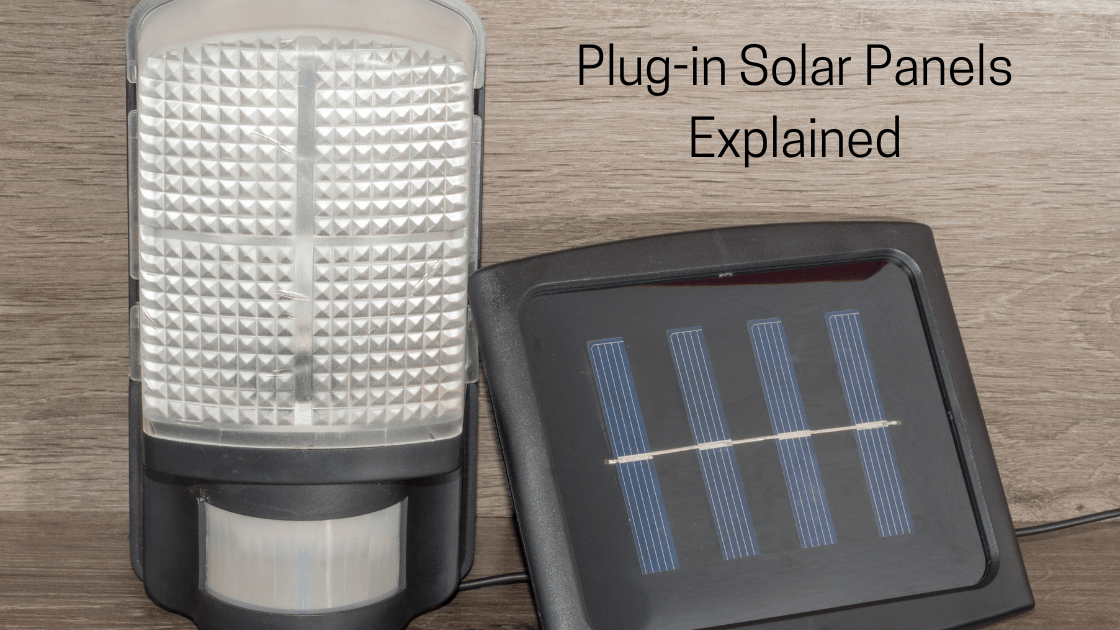
Plug-in solar panels are about to go mainstream in the UK. From 27 August 2026, compliant plug-in solar products will have a legal route onto the British market for the first time: no electrician, no rooftop, no planning application.
For renters, flat-dwellers, and anyone locked out of conventional rooftop solar, it’s a genuinely new option.
But “legal from 27 August” comes with more fine print than most headlines admit. This guide explains how plug-in solar actually works, exactly what the new rules do and don’t allow, the realistic savings, and crucially how to tell a genuinely safe, legal kit apart from a dangerous DIY back-feeding setup that could injure someone.
What is plug-in solar?
Plug-in solar (also called “balcony solar” or “plug-and-play solar”) is a small photovoltaic system you connect to your home through a standard wall socket, rather than hardwiring it into your consumer unit.
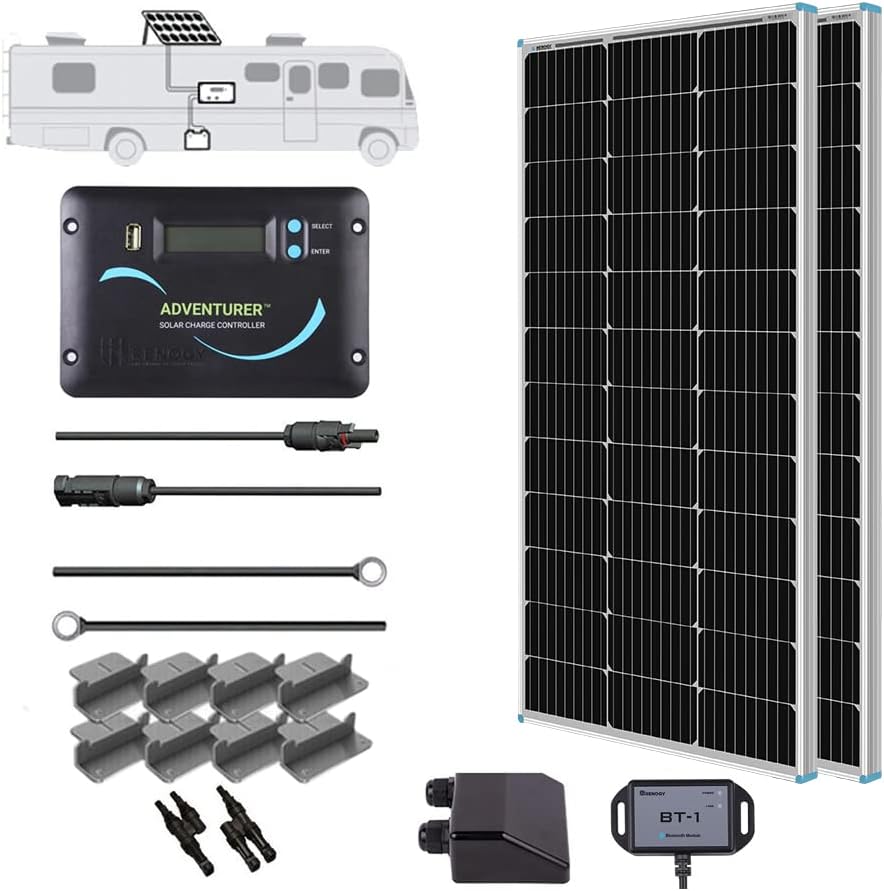
A typical kit contains.
- One to four solar panels, often mounted on a balcony railing, wall, patio or small ground frame
- A microinverter, which converts the panels’ DC output into grid-compatible AC
- A cable with a factory-fitted plug that goes into an ordinary socket
When the sun shines, the system feeds electricity into your home’s circuit. Your appliances draw that free solar power first and only top up from the grid when the panels can’t keep up.
The appeal is obvious: it’s cheap, portable, requires no professional installation, and you can take it with you when you move.
The technology has been common across Europe for years. Germany alone has installed well over a million balcony systems, but until now, British wiring standards effectively blocked it.
Existing rules prohibited using a standard household plug to feed electricity into a socket, which is exactly what these systems do.
What changed on 27 August 2026?
The legal shift comes through the Plugs and Sockets, etc. (Safety) (Amendment) Regulations 2026 (SI 2026/848), which amend the UK’s 1994 plug-and-socket safety framework.
The government also published its consultation response and a final Plug-in Solar Device Interim Product Specification (Version 2.0).
Together, these create a narrow, tightly defined legal route: a qualifying plug-in solar device can be plugged into a standard UK socket and operated in parallel with the grid, provided it meets the full specification.
The most important thing to understand is that this is not a blanket legalization. It does not make every balcony kit or microinverter cable currently on sale legal.
It creates an exemption for complete, approved products that meet a specific list of requirements and nothing else.
The rules: what qualifies as a legal kit
To be legal under the interim specification, a plug-in solar device must meet all of the following:
| Requirement | Limit |
|---|---|
| Maximum inverter output | 800W / 800VA, and no more than 3.5A AC |
| Maximum panel capacity | 2,000W of panels total |
| Panel configuration | Up to 4 panels, maximum 2 panels per string |
| Plug | A factory-fitted BS 1363 (standard UK) plug with a 5A fuse |
| Supply | Sold as a complete kit — not assembled from separate parts |
| Grid behaviour | Must operate in parallel with the grid |
| Storage | Must not import electricity from the house to store for later use |
| Connection point | Must connect to an eligible final power circuit; no extension leads or multi-way adapters |
| Circuit rule | One kit per eligible final circuit |
A few of these deserve emphasis
It must be a complete, factory-assembled product
A random imported kit, a modified microinverter cable, or a system you build from separately purchased parts will not comply even if the individual components look identical to those in an approved kit. The plug must be fitted at the factory, not by you.
No battery storage (yet)
The specification covers PV-only devices. Systems that import grid electricity to charge a battery for later use are excluded.
This is a real catch, because many plug-in “solar” kits sold today include a battery, which makes them the wrong kit under the new rules.
Plug-in battery systems may be legalized separately in the future, but they are not covered on 27 August 2026.
No extension leads or adapters
The kit must plug into an eligible fixed socket directly. Running it through an extension lead or a multi-way adapter takes it outside the rules.
“Legal” doesn’t yet mean “buyable.”
Here’s the nuance the headlines gloss over. Two separate things have to line up before you can actually buy and use a compliant kit
- The regulations in force: This happens on 27 August 2026.
- A certified product on sale: this has no confirmed date at all.
At the time the specification was published, there were no approved products on the market. Manufacturers have to get individual product type-tested and listed.
The register to watch is the ENA (Energy Networks Association) Connect Direct Type Test Approval register, filtered for “Plug-in-Solar.” Until a product appears there, “legal” is theoretical.
Major retailers including Amazon, Lidl, Currys, B&Q, Screwfix, and others have signaled interest in stocking plug-in solar, and the minister for energy consumers has publicly backed the technology as “transformative for renters or those on lower incomes.”
But as of the specification’s publication, no UK retailer had confirmed an on-sale date. The realistic expectation is that stock will arrive once certified kits exist, not on 27 August itself.
Practical takeaway
Don’t rush to buy anything marketed as “plug-in solar” before the legal date. Many kits advertised right now do not meet the specification. Wait for a product confirmed as assessed against the standard and listed on the ENA register.
The safety story: certified kits vs dangerous DIY
This is the part that matters most and where the distinction between legal equipment and unsafe improvisation becomes a safety issue, not just a legal one.
What makes a certified plug-in kit safe
A compliant plug-in solar kit is safe because of one critical feature built into its microinverter: anti-islanding protection.
Anti-islanding means the inverter constantly monitors the grid. The instant the grid loses power, the inverter shuts down and stops producing.
This prevents the system from energizing a circuit that utility workers believe is dead, which would otherwise create a lethal electrocution hazard.
A certified grid-tied microinverter (in the UK, meeting the relevant standards; in the EU, VDE-AR-N 4105) provides this protection automatically.
Combined with the output cap (800W / 3.5A is a small fraction of a household circuit’s capacity), a proper 5A-fused plug, and a complete factory-tested assembly, a certified kit introduces no meaningful fire risk and no danger to the grid or its workers.
Every verified safety incident involving plug-in solar traces back to uncertified equipment, incorrect wiring, or damaged outlets, not the technology itself.
What makes DIY back-feeding dangerous
“Back-feeding” is the practice of pushing power into your home’s wiring through an outlet without the proper protections. Done improperly, it’s genuinely dangerous, and it’s the exact thing the new regulations are designed to keep off the market. The hazards include:
Electrocution of utility workers
Without anti-islanding, an inverter can keep energizing the line during an outage. Under fault conditions, a low-voltage backfeed can even be stepped back up through the local transformer to distribution voltage, which is lethal to a line crew who believe the circuit is dead.
Bypassing overcurrent protection
Injecting power downstream of your breaker means the circuit’s protective device no longer “sees” all the current flowing in the wires.
In a fault, conductors can be pushed beyond their safe rating without the breaker tripping, creating an overheating and fire risk.
Exposed live conductors
The most notorious DIY hazard is the “suicide cable,” a lead with a plug on both ends. While one end is powered, the other end’s pins are live and exposed. Never use one.
Damaged GFCI/RCD protection
Feeding power backwards through an outlet can damage the residual-current protection that’s meant to keep you safe.
Uncertified components
Cheap, uncertified microinverters and cables may lack anti-islanding entirely, degrade outdoors, and expose live wiring over time.
The simple rule
If a setup is a complete, factory-assembled, certified kit with a factory-fitted plug and anti-islanding built in and it’s listed on the ENA register, it’s the legal, safe kind.
If it’s assembled from parts, uses a modified or double-ended cable, runs through an extension lead, or uses an uncertified inverter, it’s the dangerous kind, and it won’t be legal even after 27 August. When in doubt, don’t improvise, and don’t let anyone talk you into a “clever” workaround.
Realistic savings
Plug-in solar won’t run your whole home, and it’s important to be honest about the numbers. Government and retailer estimates put the savings for a typical setup at roughly £110 per year, though your actual figure depends heavily on a few factors:
How much you’re home during daylight
Plug-in solar saves you money only when you use the power as it’s generated. If your home is empty every weekday afternoon, much of the free electricity has nowhere useful to go (and with no battery, it can’t be stored).
Your baseline daytime load
Always-on devices, fridges, freezers, routers, and standby electronics soak up solar output efficiently. Big daytime loads like a home office or heat pump help even more.
Panel orientation and shading
A south-facing, unshaded balcony will substantially outperform a north-facing or shaded one.
Your electricity tariff
The higher your unit rate, the more each self-consumed kilowatt-hour is worth.
At around £110/year, a kit costing a few hundred pounds typically pays back over several years, reasonable but not spectacular.
The stronger case is for people who cannot install rooftop solar at all, renters, leaseholders, and flat-dwellers, for whom this is the only realistic route into self-generation and who can take the kit with them when they move.
Limitations to keep in mind
Before you buy, weigh these honestly.
No storage
Without a battery, unused solar power is simply lost. Evening and overnight use gets no benefit.
Modest output
The 800W cap means this supplements your usage — it doesn’t replace your supply.
Permission and tenancy
Renters should check their tenancy agreement and leaseholders their lease before mounting anything.
Balcony fixings may need freeholder or managing-agent approval, and there may be building or listed-status considerations.
DNO notification
Even small generators can carry network-notification expectations. Check the guidance that comes with a certified kit.
Product availability
As covered above, certified kits may not be on shelves the moment the law changes.
Frequently asked questions
Is plug-in solar legal in the UK?
From 27 August 2026, yes, but only for complete, certified products that meet the Plug-in Solar Device Interim Product Specification. Kits assembled from parts, modified cables, or uncertified products remain non-compliant.
Can I buy a kit on 27 August 2026?
Possibly not immediately. The law comes into force that day, but products must be individually approved and listed on the ENA Connect Direct register first. Watch that register for certified kits.
How much can I save?
Around £110 a year for a typical setup, depending on your daytime usage, tariff, orientation, and shading.
Can I add a battery?
Not under the current specification, which covers PV-only devices that don’t import grid power for storage. Plug-in battery systems may be legalized separately in the future.
Is it safe?
A certified kit with anti-islanding protection, a factory-fitted plug, and compliant components is safe.
DIY back-feeding double-ended cables, uncertified inverters, and extension-lead connections are dangerous and illegal and can put utility workers and your home at risk.
Do I need an electrician?
No, that’s the point of plug-in solar. A compliant kit plugs into an eligible socket directly. But you must use it exactly as specified: no extension leads, no adapters, one kit per circuit.
This article is general information, not legal or electrical advice. Regulations and product availability are evolving; always check the current government guidance, the ENA Connect Direct Type Test Approval register, and a certified kit’s own instructions before buying or installing. If you’re ever unsure about an electrical setup, consult a qualified electrician.
