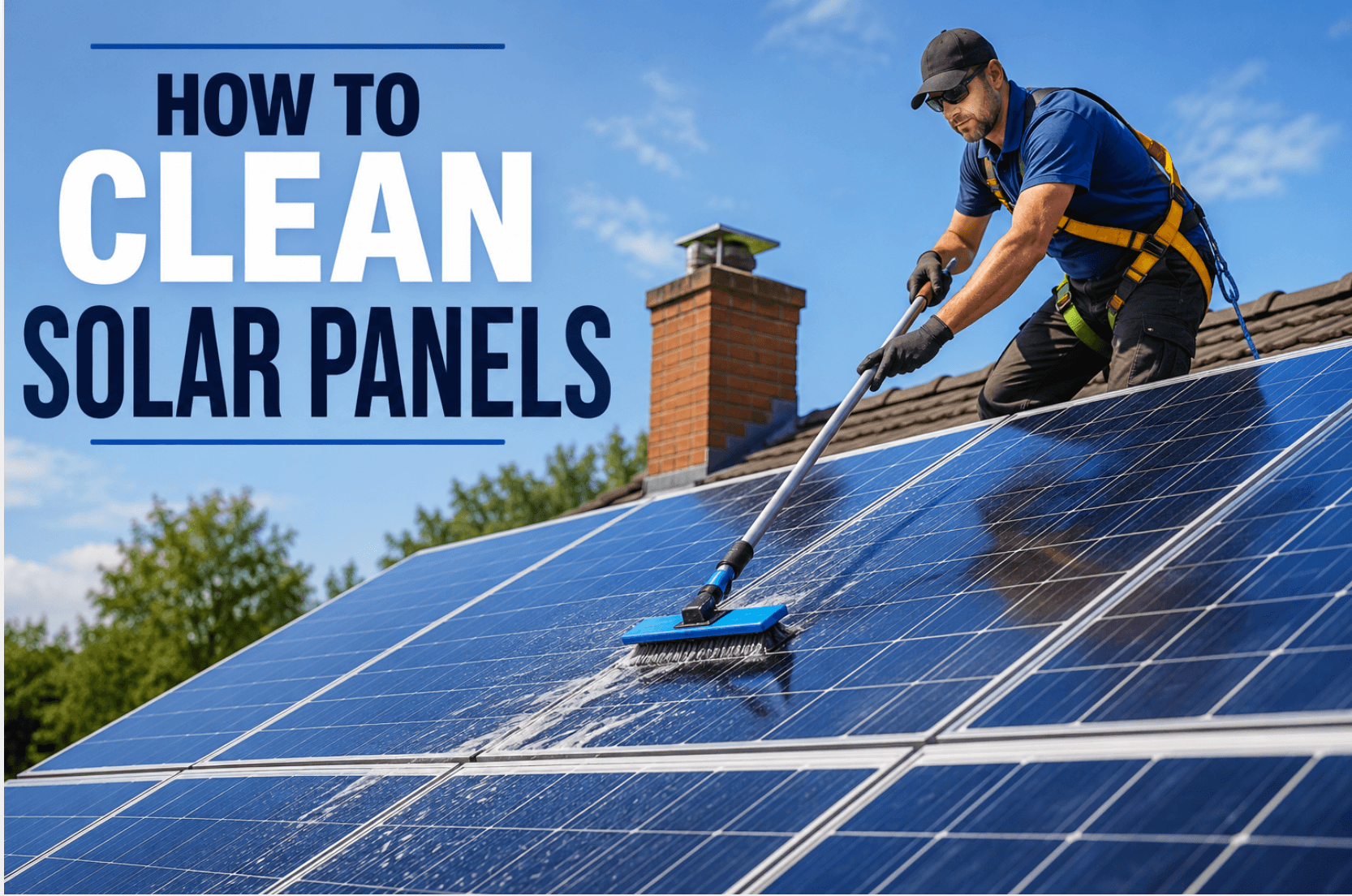
Your solar panels are quietly losing money right now, and most homeowners never notice. Not because the panels are failing, but because a thin film of dust, pollen, bird droppings, and grime is sitting between the sun and your cells, skimming a percentage off every kilowatt-hour you should be generating.
I’ve spent years designing and installing solar systems, and the single most common surprise I see among solar owners isn’t a hardware fault; it’s the slow, invisible drift in production that comes from panels nobody ever cleans.
The good news: cleaning solar panels is one of the few maintenance tasks you can genuinely do yourself, safely, and the payback is immediate and measurable.
This guide walks through exactly how to clean solar panels the right way, what tools to use (and which to avoid), how often to do it based on where you live, and the real numbers behind why a dirty array costs you. By the end, you’ll know whether to grab a hose this weekend or leave it to a professional.
Why Dirty Solar Panels Lose You Money
Before the how, you deserve the why, because it changes how seriously you’ll take this.
A solar panel works by letting photons strike the photovoltaic cells beneath the glass. Anything that blocks or scatters that light before it reaches the cell reduces the current the panel produces. This is called soiling loss, and it’s one of the best-documented performance drains in the entire solar industry.
How much output do dirty panels actually lose?
The honest answer is it depends heavily on your environment, but the ranges are well established.
- In clean, rainy climates, soiling typically costs 2% to 5% of annual output. Rain does a lot of the work for you.
- In dusty, dry, or high-pollen regions, losses commonly run 15% to 25% during dry spells.
- In extreme cases, agricultural zones with airborne dust, deserts, or areas near construction, soiling can briefly cut output by 30% or more before any cleaning.
To put that in money terms: if your system produces $1,800 of electricity value per year and you’re silently losing 20% to soiling during the dry months, that’s a few hundred dollars evaporating annually, far more than the cost of a hose and a soft brush.
Why a little dirt does outsized damage
Here’s the part that surprises people. Solar cells within a panel are wired in series, like links in a chain.
The current flowing through that string is limited by its weakest cell. So a single concentrated obstruction, a bird dropping, a clump of leaves, or a smear of mud can drag down the output of an entire section of the panel, not just the shaded spot.
This is why even light, uneven soiling matters more than a thin, uniform layer of dust. A uniform film of pollen reduces everything slightly.
A few well-placed droppings can act like partial shading and create disproportionate losses, sometimes triggering bypass diodes and knocking out whole cell groups.
The hidden long-term cost: hot spots
There’s a durability angle too. When part of a cell is blocked while the rest keeps producing, the blocked area can heat up, creating a hot spot.
Over the years, repeated hot-spotting can degrade the cell, discolor the encapsulant, and shorten the panel’s useful life.
Regular cleaning isn’t just about today’s output; it protects the long-term health of your investment.
How Do You Know Your Panels Need Cleaning?
You don’t have to guess. There are four reliable signals.
Your monitoring app shows a downward drift
This is the gold standard. Most modern inverters and systems come with monitoring. Compare this month’s production to the same month last year, adjusting for weather. A persistent, unexplained dip of 5% or more on sunny days often points to soiling.
Visible buildup
If you can see a film, streaks, droppings, pollen, or a dull haze on the glass from the ground, the panels are past due.
A long dry stretch
If it hasn’t rained meaningfully in several weeks and you live somewhere dusty, assume soiling is accumulating even if you can’t see it clearly from below.
Local events
Wildfire smoke and ash, nearby construction, pollen season, dust storms, or harvest season on neighboring farmland all deposit material fast.
If you want to be rigorous, note your production on a clear day, clean the panels, and then compare production on the next equally clear day. The jump is your soiling loss, made visible.
When NOT to Clean Solar Panels Yourself
I’ll be direct, because safety matters more than a few percent of output. Do not get on your roof to clean panels if any of the following apply:
- Your roof is steep, slippery, or high, and you don’t have proper fall protection.
- The panels are wet with morning dew (slip risk), or it’s windy.
- It’s the middle of a hot, sunny day; more on why below.
- You’d need to walk on the panels to reach them. Never stand on solar panels. The glass can micro-crack under your weight even if it doesn’t visibly break.
If your array is on a second story, a steep pitch, or otherwise hard to reach, the right move is a professional cleaning service or a ground-based extension system. No cleaning gain is worth a fall. When in doubt, clean from the ground or hire out.
Best Time of Day to Clean Solar Panels
Timing matters more than people expect.
Clean early in the morning or in the evening, on a cool, overcast, or mild day. Here’s why:
Thermal shock
Panels get hot in direct sun, often 50°C to 65°C on the glass. Spraying cold water on hot glass causes rapid contraction that, over time, can stress or crack the glass. Cleaning when panels are cool eliminates this risk.
Faster evaporation = streaks
On a hot panel, water evaporates almost instantly, leaving mineral deposits and streaks that themselves reduce output. Cool conditions let you rinse cleanly.
Morning dew softens grime
Early morning, the overnight dew has often loosened light soiling, so it rinses off with less effort.
Avoid midday cleaning in summer entirely. Aim for that calm, cool window at the start or end of the day.
What You Need to Clean Solar Panels: Tools and Supplies
You don’t need expensive equipment. Here’s the practical kit.
Essential:
- A garden hose with an adjustable spray nozzle (not a pressure washer, more on that below).
- A soft brush or soft-bristled squeegee on an extension pole, ideally one designed for solar or vehicle glass. Softness is non-negotiable to avoid scratching.
- A bucket of clean water.
- Deionized or distilled water if your tap water is hard. Hard water leaves mineral spots as it dries.
Helpful but optional
- A mild, non-abrasive soap (a tiny amount of dish soap) for stubborn grime like bird droppings or sap. Use sparingly and rinse thoroughly.
- A soft microfiber cloth for spot cleaning reachable panels.
- A telescoping water-fed pole with a soft brush head, the same kind window cleaners use. This is the best tool for cleaning the ground.
- Soft rubber gloves and non-slip footwear if you must be near the roof edge.
Never use:
Pressure washers
The high-pressure stream can force water past the panel seals, damage the frame, crack cells, or void your warranty. Many manufacturers explicitly prohibit them.
Abrasive pads, steel wool, or scrub brushes
These scratch the anti-reflective coating on the glass, permanently reducing output.
Harsh detergents, solvents, ammonia, or bleach
These can damage seals, coatings, and the anti-reflective layer.
Metal blades or scrapers for stuck-on debris.
The guiding principle: treat the panel glass like you’d treat the lens of an expensive camera. Soft, clean, gentle.
How to Clean Solar Panels: Step-by-Step
Here’s the full process. For most homeowners with accessible panels, this takes 30 to 60 minutes.
Step 1: Check the manufacturer’s guidance and your warranty
Before anything, glance at your panel manufacturer’s cleaning instructions. Most are similar to this guide, but some specify particular do’s and don’ts, and following them keeps your warranty intact. If a professional installed your system, they may also have left maintenance notes.
Step 2: Power down the system (recommended)
While cleaning the front glass with water is generally low-risk, the cautious, correct approach is to shut down the system first.
Turn off the inverter, then the AC disconnect, then the DC disconnect, following the shutdown sequence on your inverter or in your manual.
This protects you and the equipment, especially if you’ll be near wiring or junction boxes. If you’re only doing a quick ground-level rinse of the front glass, the risk is minimal, but powering down is best practice.
Step 3: Pick the right conditions
Confirm it’s a cool morning or evening, the panels aren’t blazing hot, and it’s not windy. Wet panels plus wind plus a roof is a bad combination.
Step 4: Clear loose debris with a dry pass or gentle rinse
Start by rinsing the panels with plain water from your hose on a gentle spray to wash away loose dust, leaves, and pollen.
This alone resolves a large share of soiling and prevents you from grinding grit into the glass when you brush. Spray from a low angle and let the water do the work.
Step 5: Wash with a soft brush and water
If a rinse isn’t enough, fill your bucket with clean water (add a tiny amount of mild soap only if needed for stubborn spots).
Dip your soft brush or squeegee and gently work across the glass surface. Use light pressure and straight, even strokes.
Let the soft bristles lift grime; don’t scrub aggressively. For bird droppings or sap, let soapy water sit for a minute to soften the deposit, then gently wipe.
Step 6: Rinse thoroughly
Rinse all soap and loosened dirt off completely. Any soap residue left behind attracts dust and can streak.
If you have hard water, finish with a rinse of deionized or distilled water to prevent mineral spotting as it dries.
Step 7: Let it air dry (or squeegee)
In cool conditions, panels can air dry without streaking. If you want a spotless finish on reachable panels, a soft rubber squeegee pulls water off cleanly. Avoid wiping with cloths that might trap grit.
Step 8: Check your production
A day or two later, on a clear day, look at your monitoring data. You should see production tick back up. That number is your reward and your motivation to keep a cleaning schedule.
Cleaning Solar Panels From the Ground (The Safe Default)
For most homeowners, the smartest approach is to never get on the roof at all.
A telescoping water-fed pole with a soft brush head lets you reach roof-mounted panels from a ladder or even the ground, depending on your roof height.
Water flows through the pole to the brush, so you rinse and scrub in one motion. Window-cleaning suppliers sell these, and they’re the same tools professional solar cleaners use.
For ground-mounted arrays or low single-story roofs, a standard extension brush and a hose handle everything with zero fall risk.
This should be your default unless you have proper roof access, fall protection, and experience. The few percent of output you might gain from a more thorough hands-on clean is never worth a serious fall.
How Often Should You Clean Solar Panels?
There’s no single answer; it depends on your climate and surroundings. Here’s a practical framework.
General baseline: 2 to 4 times per year works for most homeowners in moderate climates with regular rainfall.
Adjust based on your situation.
Rainy, clean-air regions
Once or twice a year may be plenty. Rain handles most soiling. Just inspect after pollen season and storms.
Dry, dusty, or desert climates
Every 1 to 3 months during dry seasons. Soiling accumulates fast with no rain to rinse it.
High-pollen areas
An extra clean in spring when pollen is heavy.
Near farms, construction, or busy roads
More frequent airborne dust and dirt deposits constantly.
Coastal areas
Salt spray builds a film; clean more often.
Flat or low-tilt panels
Dirt doesn’t run off as easily on steep slopes, so they need cleaning more often. Steeply tilted panels self-clean better in rain.
After major events
Wildfire ash, dust storms, or heavy bird activity warrant an immediate clean regardless of schedule.
The best schedule is the one your monitoring data tells you to follow. Watch your production, and clean when you see soiling losses creeping up. Over a year or two, you’ll learn your array’s rhythm.
Do You Need Special Cleaning Solutions or Equipment?
Mostly, no. For the vast majority of homeowners, clean water and a soft brush are all you need. Plain water resolves typical dust and pollen soiling. A drop of mild soap handles the occasional stubborn deposit.
That said, a few specialized options exist:
- Deionized/distilled water systems are worth it if you have very hard water, since they leave no mineral residue and need no soap or drying.
- Purpose-made solar panel cleaning solutions exist and are fine to use, but they’re rarely necessary for residential systems. If you use one, choose a non-abrasive, pH-neutral formula designed for solar or glass.
- Automated cleaning systems (robotic cleaners, sprinkler-style rinse systems) are used on large commercial and utility arrays where manual cleaning isn’t practical. For a home rooftop, they’re overkill.
Skip anything that promises a “coating” that “never needs cleaning” unless it’s from a reputable manufacturer with real data. Many such products underdeliver.
Hard Water, Streaks, and Mineral Spots
A frequent frustration: you clean the panels, they dry, and now there are white mineral spots that look as bad as the dirt you removed. That’s hard water, dissolved calcium and magnesium that stay behind as the water evaporates.
Solutions:
- Use distilled or deionized water for the final rinse or for the whole job if your tap water is very hard.
- Clean in cool conditions so water dries slowly and evenly rather than flash-evaporating into spots.
- Squeegee-reachable panels dry before the water can evaporate.
If spots have already built up over time, a mild solution of water with a little white vinegar can help dissolve light mineral deposits, followed by a thorough plain-water rinse. Test gently and rinse well; don’t let acidic solutions sit on seals.
Professional Solar Panel Cleaning: Cost and When It’s Worth It
Hiring a professional makes sense when your roof is high or steep, your array is large, you’re not comfortable with heights, or you simply want it done thoroughly and safely.
Typical costs for residential professional cleaning range widely by region and system size, often somewhere in the rough range of $10 to $30 per panel, or a flat call-out fee for smaller systems. Larger systems usually get a better per-panel rate.
Is it worth it? Run the math. If professional cleaning recovers, say, 15% of output during the dirty months, and that’s worth a few hundred dollars a year, a once- or twice-yearly professional clean often pays for itself, especially when you factor in avoiding a roof fall.
For ground-mounted or single-story systems, DIY is usually the better value. For tall, steep, or large arrays, professionals are frequently the smarter choice.
When choosing a service, confirm they use soft brushes and purified water (not pressure washers), and ask whether they inspect for damage while up there; a good cleaner will flag cracked glass, loose mounts, or wiring issues.
Does Rain Clean Solar Panels Enough?
Partly, but rarely completely.
Rain does meaningful work, especially on tilted panels, washing away loose dust and pollen. In wet climates, rain may keep soiling losses low enough that you only need to intervene occasionally.
But rain has limits:
- It doesn’t remove sticky or bonded soiling like bird droppings, sap, or pollen paste.
- Light rain can actually make things worse temporarily, lifting dust into a muddy film that dries into streaks.
- Flat or low-tilt panels don’t shed water well, so dirt and water pool and dry in place.
- Long dry seasons mean no rain for months, soiling just accumulates.
So treat rain as a helpful partner, not a complete solution. Even in rainy areas, an occasional inspection and targeted clean keeps output where it should be.
Special Situations Worth Knowing
Bird droppings
These are among the worst offenders because they’re opaque, concentrated, and bonded to the glass, classic causes of hot spots and bypassed cell groups.
If birds frequent your roof, you may need spot-cleaning between full washes. Bird deterrents around the array can help.
Snow
Snow usually slides off tilted panels as it melts, and you generally shouldn’t climb up to remove it; the risk outweighs the gain, and you can scratch panels or hurt yourself.
If safe ground access exists, a soft snow rake (foam-bladed, panel-safe) can help clear lower panels. Never use metal tools or rock salt.
Pollen
Spring pollen forms a fine, sometimes sticky film. A plain-water rinse usually handles it; clean after the heaviest pollen weeks.
Wildfire ash
Ash is fine, abrasive, and can be slightly acidic. Rinse it off gently rather than wiping dry to avoid grinding it into the glass. Clean promptly after smoke events.
Coastal salt
Salt film builds invisibly and attracts moisture and dust. Coastal owners should rinse more frequently.
A Simple Maintenance Routine That Keeps Output High
You don’t need to overthink this. Here’s a low-effort routine that keeps soiling losses minimal:
- Check your monitoring monthly. Look for unexplained production drops on sunny days.
- Inspect each season visually. A quick look from the ground tells you a lot.
- Rinse a few times a year, more in dry or dusty seasons, with a hose or water-fed pole from the ground.
- Spot-clean bird droppings and sticky deposits promptly, since these do outsized damage.
- Hire a pro once a year or so if your roof is tall, steep, or large, and have them inspect while they’re up there.
That’s it. The discipline that pays off most isn’t scrubbing harder; it’s watching your data and acting when the numbers tell you to.
The Bottom Line
Cleaning your solar panels is simple, cheap, and one of the highest-return maintenance tasks in solar ownership.
Dirty panels quietly shave anywhere from a couple of percent to a quarter or more off your output, and the fix is usually nothing more than a hose, a soft brush, cool conditions, and a little attention to your monitoring data.
Do it from the ground whenever you can; never sacrifice safety for a few extra percent, use soft tools and clean water, avoid pressure washers and harsh chemicals, and let your production data guide your schedule.
Get this right, and your array will reward you with every kilowatt-hour it was designed to deliver, for decades.
Your panels are working hard up there. A clean front row of glass is the least you can do to let them.
Frequently Asked Questions
How often should I clean my solar panels?
For most homeowners in moderate climates, 2 to 4 times a year is enough. In dusty, dry, or high-pollen regions, clean every 1 to 3 months during dry seasons. The best guide is your production monitoring; clean when you see soiling losses rising.
Can I clean solar panels with a pressure washer?
No. Pressure washers can force water past seals, crack cells, damage the frame, and void your warranty. Use a regular garden hose with a gentle spray and a soft brush instead.
Do dirty solar panels really reduce output?
Yes. Soiling typically reduces output by 2% to 5% in clean, rainy climates and 15% to 25% (occasionally more) in dusty, dry regions.
Concentrated soiling like bird droppings can cause disproportionate losses by dragging down entire cell strings.
What’s the best time of day to clean solar panels?
Early morning or evening on a cool, mild day. Cleaning hot panels in direct sunlight risks thermal shock from cold water and leaves streaks as water evaporates too fast.
Do I need special cleaning solutions?
Usually not. Clean water and a soft brush handle most of the soiling. Use a drop of mild soap for stubborn deposits and distilled or deionized water if your tap water is hard and leaves mineral spots.
Does rain clean solar panels enough?
Rain helps, especially on tilted panels, but it doesn’t remove bonded soiling like bird droppings or sap, and it can leave streaks. Even in rainy climates, occasional inspection and targeted cleaning are worth it.
Should I get on my roof to clean my panels?
Only if you have safe, proper access and fall protection. For most homeowners, cleaning from the ground with a water-fed extension pole or hiring a professional for tall or steep roofs is the safer and recommended approach. Never walk on the panels themselves.
How much does professional solar panel cleaning cost?
Costs vary by region and system size but often fall roughly in the range of $10 to $30 per panel, with better rates for larger systems. For tall, steep, or large arrays, the safety and thoroughness often justify the cost.
