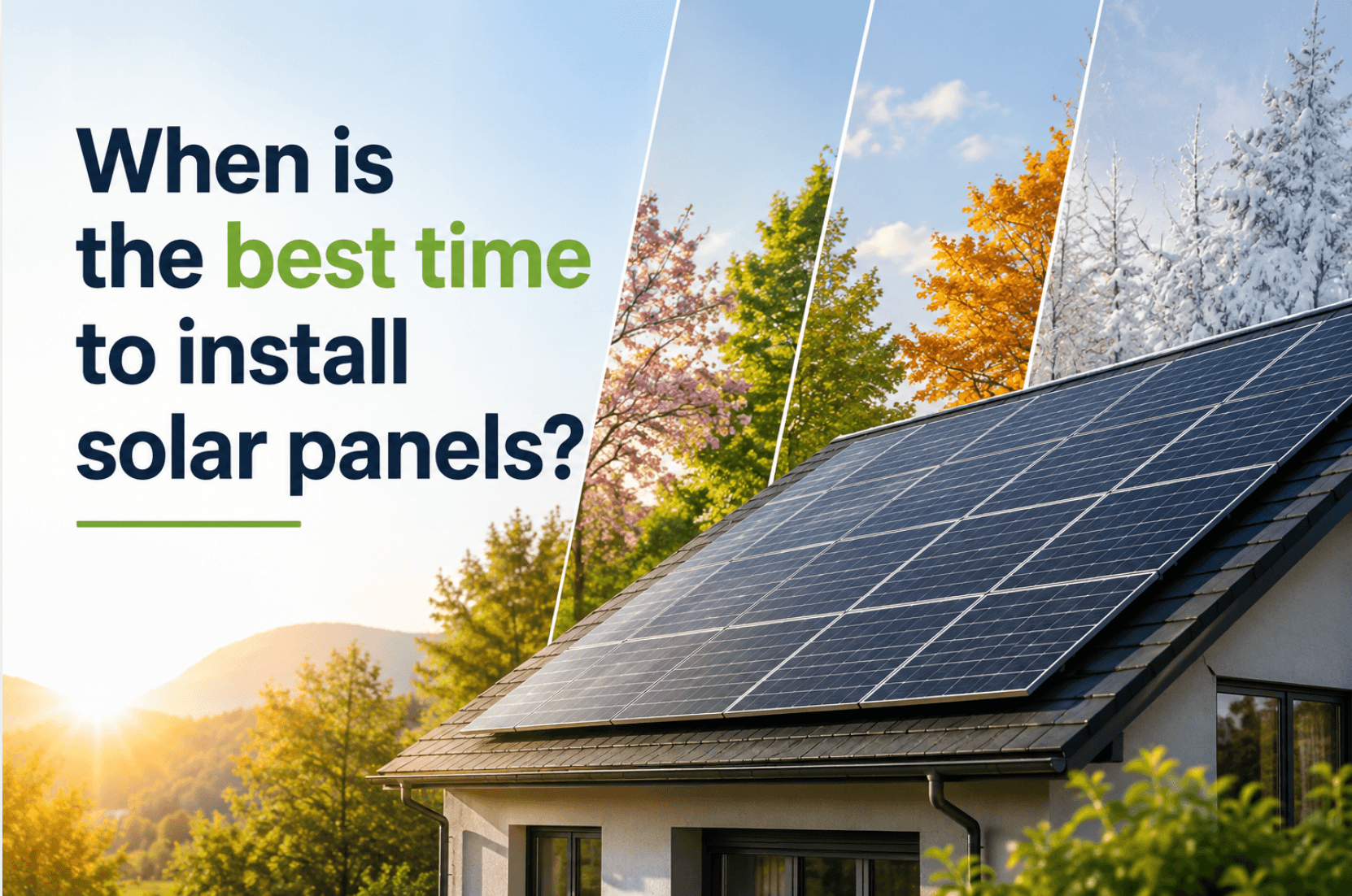
If you’ve been weighing rooftop solar, the question of when is the best time to install solar panels matters more than most homeowners expect.
The right timing can shorten your payback period, lock in better incentives, and get your system producing power before the sunniest months arrive.
The wrong timing can mean missed rebates and an installer backlog that pushes your project out by months.
After more than a decade designing and installing solar systems, I’ve seen homeowners save thousands simply by scheduling their install at the right moment.
In this guide, I’ll walk you through the best season to install, the financial and home-readiness signals that mean it’s your time, and the situations where waiting actually makes sense.
When is the best time to install solar panels?
The best time to install solar panels is late winter through early spring. Installer schedules are open, permitting moves faster, and your system is energized in time to capture peak summer production.
That said, the truly best time is whenever your roof, finances, and local incentives align; solar pays off in every season.
Is There a “Best” Season to Install Solar Panels?
Yes, but not for the reason most people assume. Panels generate electricity year-round, so the season doesn’t change your lifetime output much.
What season changes is everything around the install: scheduling, permitting speed, and when your savings begin.
Fall and Winter: Shorter Waits, Faster Permits
The solar industry has a clear busy season. Demand spikes in spring and summer when warm weather and high electricity bills push homeowners to act.
That means if you book in fall or winter, you’ll often face shorter installer queues and quicker permitting because local offices are processing fewer applications.
Installing in the off-season means your system is fully commissioned and ready the moment longer, sunnier days arrive, so you capture every kilowatt-hour of peak production from day one.
Spring: The Sweet Spot for Most Homeowners
Early spring is the timing I most often recommend. You book before the summer rush, the weather is mild enough for installers to work efficiently, and your panels come online just as solar production climbs toward its yearly peak. For most households, this combination delivers the fastest start to real savings.
Summer: Peak Sun, Peak Demand
Summer is when solar looks most attractive, but it’s also when everyone else thinks so too. Expect longer waitlists and slower permitting.
If you start the process in summer, your system may not be energized until fall, meaning you miss a chunk of the highest-production months.
7 Signs You’re Ready to Install Solar Panels
Season aside, the more important question is whether your situation is ready. Here are the signals I look for when advising homeowners.
Your electricity bills keep climbing
Rising utility rates are the single clearest signal. If your monthly bill keeps growing, every year you wait is money handed to the grid that solar could be offsetting.
Pull your last 12 months of bills and look at the trend. A steady upward line means the math is increasingly in solar’s favor.
Your Roof Is in Good Condition
Solar panels last 25 to 30 years, so your roof needs to last at least that long underneath them. If your roof is more than 15–20 years old or showing wear, replace it before installing. Removing and reinstalling panels to fix a roof later is an avoidable expense.
You Have Good Sun Exposure
South-facing roofs with minimal shading produce the most in the Northern Hemisphere, but east- and west-facing roofs work well too.
If large trees or neighboring buildings shade your roof for much of the day, address that first or reconsider panel placement.
Incentives Are Available Now
Solar incentives, tax credits, rebates, and net-metering programs change over time, and many are being reduced or phased out.
If a strong incentive is currently available in your area, that’s a reason to act sooner rather than later. Waiting can mean a meaningfully smaller benefit.
You Plan to Stay in Your Home
Solar delivers its best returns over the long run. If you intend to stay put for at least five to seven years, you’ll comfortably reach the point where the system has paid for itself and begins generating pure savings.
You’re Financially Positioned to Invest
Whether you pay cash, finance, or lease, solar should fit your budget without strain. A cash purchase delivers the strongest long-term return, while financing lets you start saving immediately if monthly loan payments come in below your current electricity bill.
You Want Energy Independence or Backup Power
If frequent outages or a desire to rely less on the grid are driving you, pairing panels with battery storage is increasingly worthwhile. That goal alone can justify moving forward regardless of the season.
When You Might Want to Wait
Honest advice means recognizing when timing isn’t right. Hold off.
- Your roof needs replacement soon. Do the roof first, always.
- You’re moving within a couple of years. You may not reach the break-even point, though solar can still raise your home’s resale value.
- A major incentive is about to launch. Occasionally, a new rebate or program is announced for the near future, worth confirming before you sign.
- Your energy use is about to change dramatically. Adding an EV, a heat pump, or a home addition changes your ideal system size. Size for where you’re headed, not where you are.
How Long Does Solar Installation Take?
Understanding the timeline helps you plan backward from when you want power flowing. The physical installation is usually the fastest part, often just one to three days on the roof. The full process, however, typically spans several weeks to a few months:
- Consultation and design: 1–2 weeks
- Permitting and approvals: 2–6 weeks (the most variable stage)
- Installation: 1–3 days
- Inspection and utility interconnection: 2–4 weeks
This is exactly why off-season timing helps: when permitting offices and utilities aren’t swamped, those middle stages move much faster. Start the process two to three months before you want your system live.
How Long Does Solar Installation Take?
Does Weather Affect the Installation Itself?
It can affect the install day, though not your decision to go solar. Installers prefer dry, mild conditions for safe rooftop work, so heavy rain, snow, or ice may push your install date.
Extreme heat can also slow a crew. This is another quiet advantage of spring and fall installs: the working weather is simply more cooperative, with fewer delays.
Frequently Asked Questions
What is the best month to install solar panels?
Late winter and early spring (roughly February through April) are ideal for most homeowners. You avoid the summer booking rush, permitting moves to be made quickly, and your system is energized before peak summer production begins.
Should I wait for solar panel prices to drop?
Prices have fallen dramatically over the past decade and continue to decline slowly, but waiting indefinitely usually costs more than it saves you, as you keep paying full electricity bills, and incentives often shrink over time. If the system pays for itself within your planned time horizon, today is generally a good time.
Can solar panels be installed in winter?
Absolutely. Crews install year-round, and cold weather doesn’t harm panels; in fact, panels are slightly more efficient in cool temperatures. Only active precipitation, like snow or ice on the roof, tends to delay the install day.
How long before solar panels pay for themselves?
Most residential systems reach payback in roughly 6 to 10 years, depending on your electricity rates, system cost, sun exposure, and available incentives. After that, the power is essentially free for the remaining 15-plus years of the system’s life.
How long before solar panels pay for themselves?
The Bottom Line
So, when should you install solar panels? The best season is late winter through early spring, when installer availability is high, permits clear quickly, and your system goes live in time for peak summer sun.
But the best time for you personally is the moment your roof, your finances, and your local incentives line up, ideally before current rebates shrink.
Every season you wait with rising electricity bills is a season of savings left on the table. If the signals above describe your situation, start the conversation with a reputable local installer now so your panels are working for you when the sun is at its strongest.
About the author: Seki Hudson is an ANCE-certified solar energy technician with over a decade of experience in solar system design and installation. He writes about practical, real-world solar adoption for homeowners at Solar Futurista.
